Cottonwood, AZ · Garage Door Service
Garage door service built around Cottonwood's 1960s-70s houses and severe summer heat, where springs and openers fail faster than the manuals ever expected.
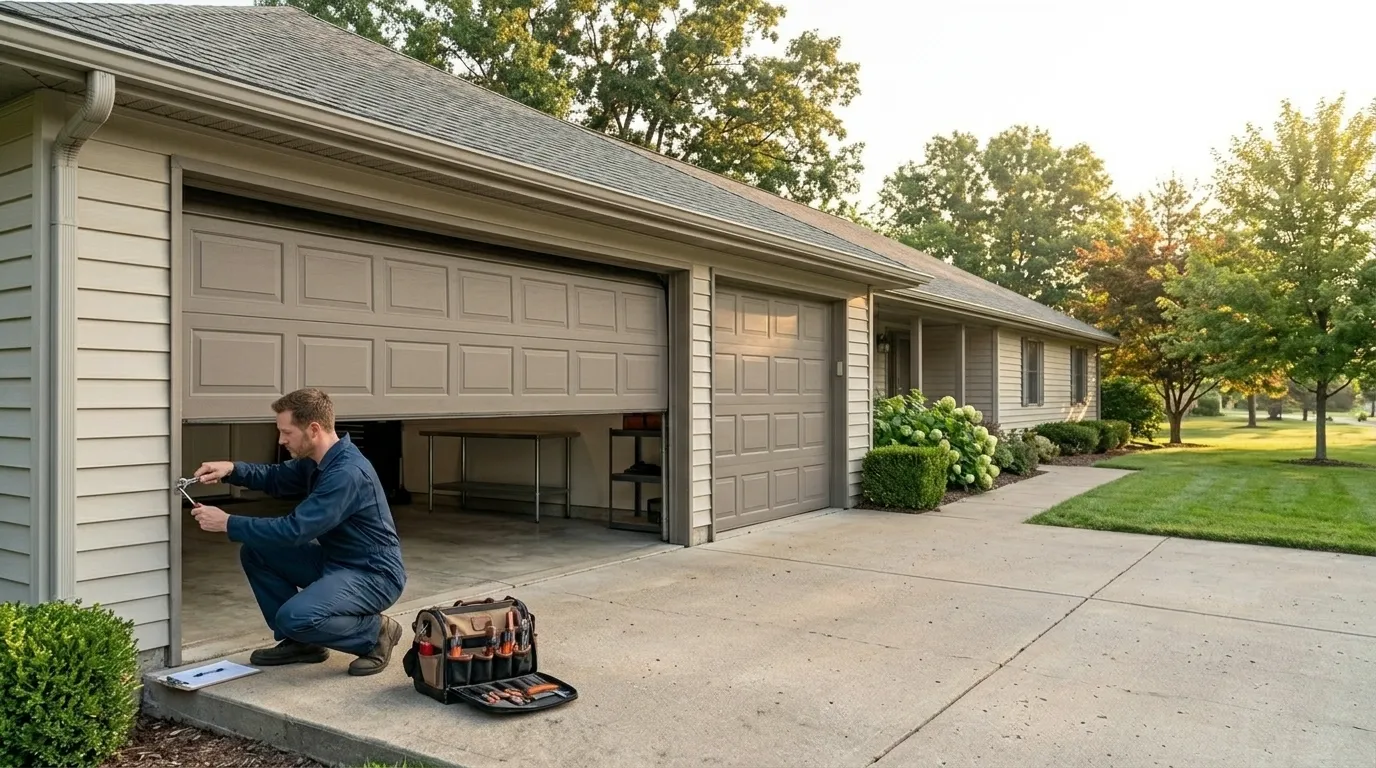
The door feels heavier than it used to, or the opener strains and reverses partway up. Sometimes it's a loud bang from the spring side followed by the door refusing to budge, or a garage that stays 20 degrees hotter than the rest of the house no matter what you do. In a service area where most of the housing stock went up in the 1960s and 70s, these are the same handful of complaints on repeat, because the doors, tracks, and springs installed then were built for a different climate and a different set of expectations than what Cottonwood summers put on them now.
What looks like one problem is often two. A spring that's lost tension because of decades of heat cycling will make the opener work harder, and an opener working harder burns out its gears faster. By the time you notice the noise or the sag, both parts have usually been degrading together for a while.
We're not going to tell you every noisy door is an emergency. Some of what you're seeing is just an older torsion spring doing exactly what a 40 or 50 year old spring does - losing a little tension every year until one day it's not enough.
Cottonwood sits in a severe heat band, and that matters more for garage doors than most people think. Steel expands and contracts with big daily temperature swings, and torsion springs lose coil tension faster under repeated heat stress than they would in a milder climate. A spring rated for a certain door weight in a cooler region can end up undersized here years before its expected service life is up.
The age of the housing stock compounds it. Doors and openers installed on 1960s and 70s houses were never built with today's heavier insulated panels or today's heat load in mind, and a lot of that original hardware is still in place because nobody thought to replace it until it failed outright. Add in a household income figure for the service area that sits below the state median, and you get a real pattern: people patch a spring or a cable instead of replacing the whole system, which is a reasonable call in the short term but means old, heat-fatigued parts stay in service longer here than in a newer, wealthier subdivision would tolerate.
Some of it, yes. You can tighten loose hardware, clean and lubricate rollers and tracks, and check whether the door is balanced by disconnecting the opener and lifting it by hand halfway - if it doesn't hold, the spring is losing tension and that's not a DIY spring job.
Torsion springs are under enough force to cause serious injury or worse if you don't have the right bars and don't know the winding sequence. That's not a scare tactic, it's just true, and it's the one repair on this list we'd tell you to skip doing yourself even if you're handy. Cable replacement carries similar risk for similar reasons.
What you can reasonably check yourself: the photo-eye sensors near the floor track (dirty or misaligned ones cause a lot of the
Call now or request a free quote - same-day service on most repairs, upfront written pricing.