Cottonwood, AZ · Garage Door Service
Local garage door repair and install for Clarkdale, AZ, 3 miles from our Cottonwood shop. Built mostly in the late 1980s, this area has its own common faults.
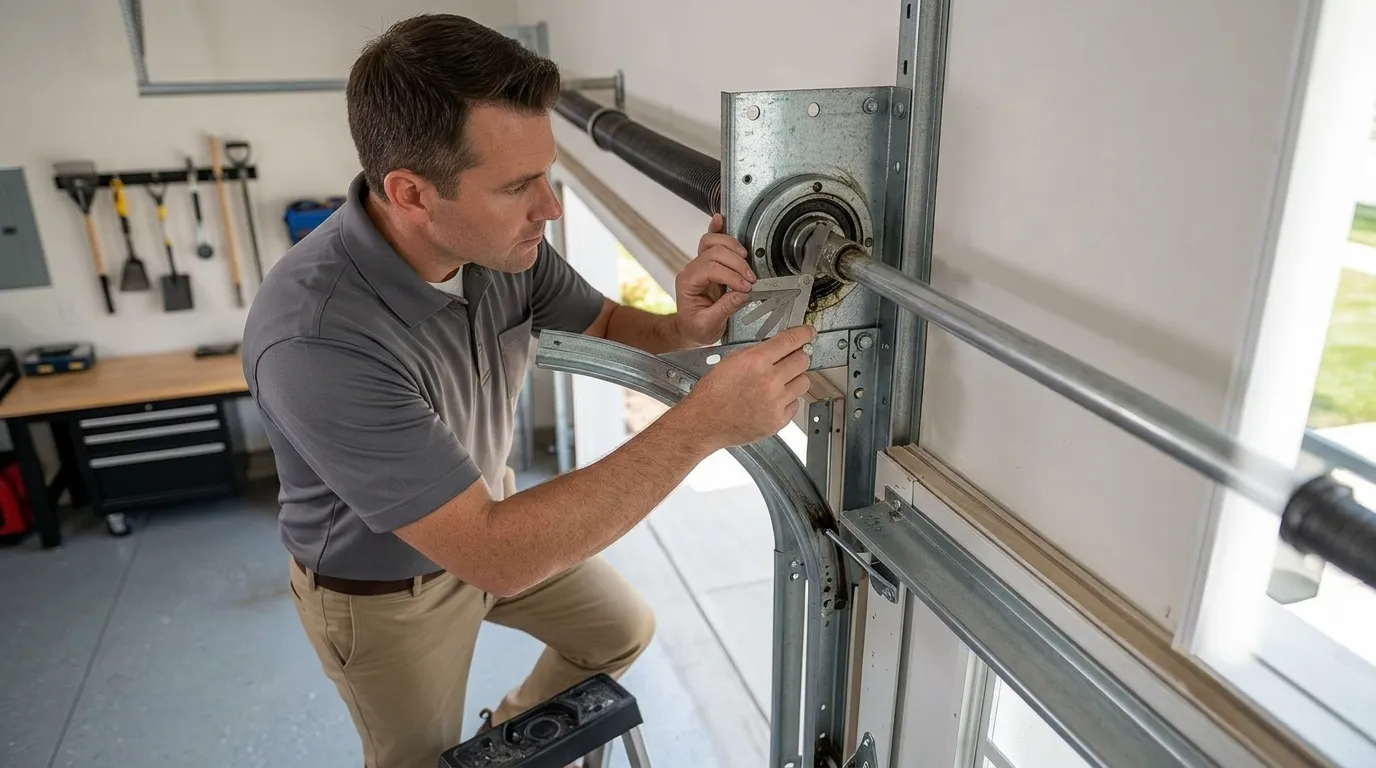
We don't keep a second shop or a depot in Clarkdale. We run the 3 miles from Cottonwood for every call here, so we're not the crew to phone if you need a door swapped inside the hour at 6 a.m. Give us a realistic window and we'll work with it.
We also don't build custom wood doors from scratch or fabricate one-off panels on site. If a job needs a specialty size or a hand-built face, we'll tell you that upfront rather than stall you with a promise we can't keep. Some of what we run into in this part of the valley is old enough that a full replacement is the honest answer instead of another patch job, and we'll say so instead of running up a bill on hardware that's on its way out anyway.
What we do handle is the everyday failure: springs, cables, rollers, openers, track alignment, and full door replacement when a repair no longer makes sense. If your problem falls outside that, we'll say it plainly instead of taking the job anyway.
Clarkdale's housing runs mostly from the late 1970s through the 1990s, with the bulk of it going up around 1988 - matching the broader pattern across this whole service area, where the typical home dates to the same window. That's a specific band of construction: post-oil-crisis energy codes, but well before the steel-reinforced, insulated doors that became standard after 2000.
With about 2,487 households in this area, you're looking at a fairly tight, consistent build era rather than a mix of decades. That matters because it means most garages here were fitted with the same generation of door and opener hardware, and most of it is now 30-plus years old. The chain-drive openers from that era, and the light-gauge steel doors that came standard on builder-grade homes of the period, are past the point where parts are easy to source new. When something fails on a door like this, it's rarely a fluke - it's the hardware reaching the end of its normal life at roughly the same time as its neighbors.
Given the age of the stock here, the calls we get from Clarkdale skew toward original torsion springs finally giving out, worn rollers that have gone past their quiet years, and openers from the 1980s-90s generation losing gear teeth or drive capacitors. These aren't emergency-grade weather failures - they're wear failures, tied directly to how old the equipment is.
The area's median household income sits lower than the service-area average, which we mention only because it shapes the calls we actually get: more repair requests than full replacements, and more questions about whether a part can be sourced before we recommend swapping the whole unit. We try to answer that honestly rather than default to the bigger job.
Heat is also a factor across this region - the climate band here runs on the severe end for heat exposure, which shortens the working life of lubricants, seals, and plastic idler pulleys faster than in milder climates. On a door already three decades old, that acceleration shows up as the rollers and pulleys being the first thing to go, well before the steel itself fails.
A door built around 1988 was almost never insulated to modern standards, and the opener that came with it was sized for a lighter door than what most owners have since put in its place. That mismatch - heavier replacement door, original motor and springs - is common in this area and is one of the quieter causes of early opener burnout.
If your home matches that late-1980s build window, the safest assumption is that you're on original or near-original torsion spring hardware unless someone's already swapped it. Springs from that era were rated for the original panel weight, not for a heavier insulated door bolted on later without recalculating the spring size. That's a mismatch we see often enough here to flag it before it becomes a snapped cable.
We don't guess at spring sizing on a job like this - we measure and calculate for the door that's actually hanging, not the one the house came with in 1988.
No. We run every job from Cottonwood, about 3 miles away. There's no separate Clarkdale location, so response times depend on the drive and our existing schedule that day, not a local dispatch point.
Most homes in this area went up around 1988, and the openers installed then are chain-drive units well past their normal service life. The door's steel often outlasts the motor and gearing, so a fine-looking door with a dying opener is common here, not a coincidence.
Depends on what's failing. A spring or roller swap on a structurally sound door from the late 1980s is usually worth it. If the panel is heavily rusted or the track is bent beyond adjustment, replacement is the more honest recommendation, and we'll tell you which situation you're in.
Yes. This area sits in a severe-heat climate band, and that dries out lubricant, cracks plastic idler pulleys, and stiffens seals faster than it would in a milder climate. On a door already decades old, that shows up as noise and roller wear well before the steel itself gives out.
Call now or request a free quote - same-day service on most repairs, upfront written pricing.