Cottonwood, AZ · Garage Door Service
Cottonwood's older housing stock and severe summer heat put real stress on garage door openers during power cuts. Here's what actually causes the failures and what to check first.
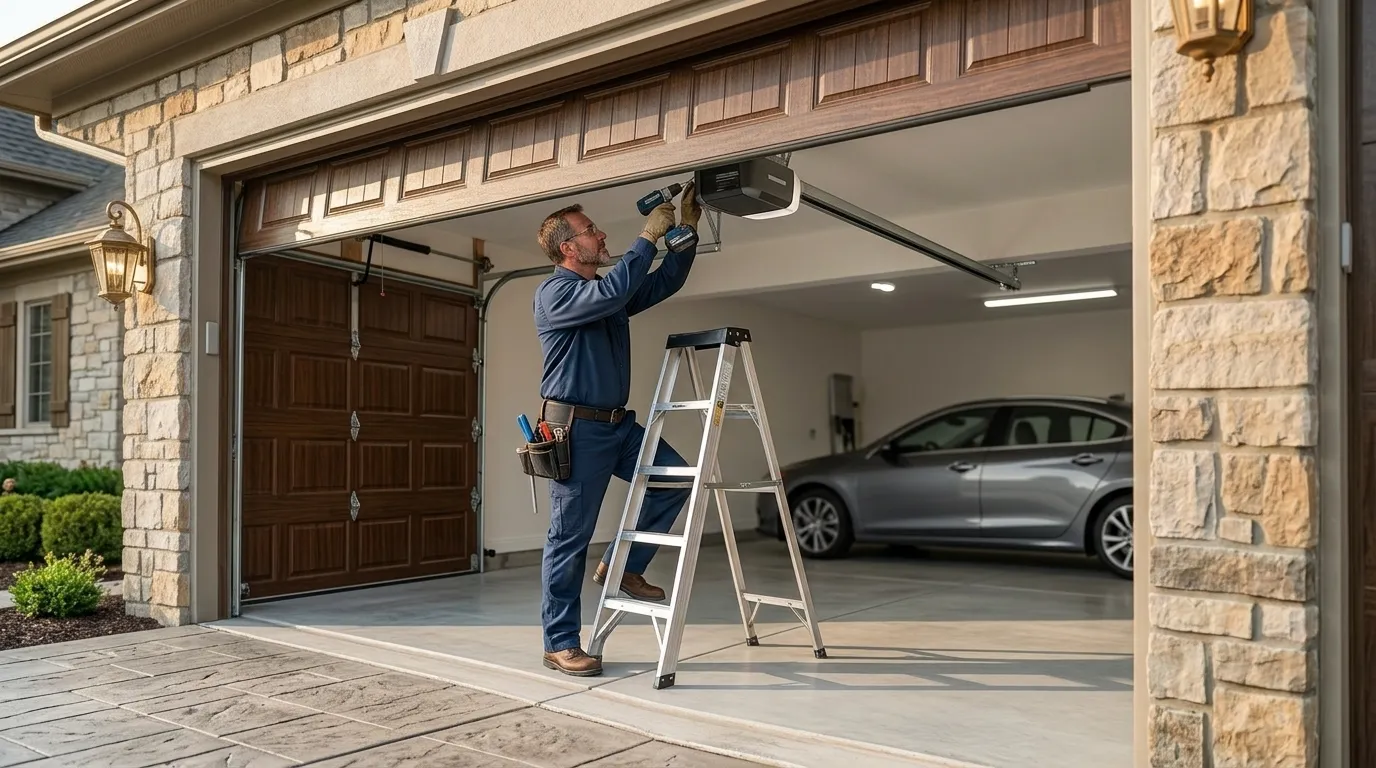
Cottonwood sits in a climate band the federal data flags as severe heat, and that matters more for garage door openers than most people think. Heat doesn't just wear out belts and gears faster - it strains the local power grid during peak afternoon and evening hours, which is exactly when air conditioners are running hardest and demand spikes. That's when brownouts and short outages happen, and that's when an opener that was already running hot from a summer of use gets hit with a voltage sag or a hard cutout mid-cycle.
Most of the houses we work on in this service area were built in the 1960s and 70s. That era of construction means original electrical runs to the garage in a lot of cases - branch circuits that were fine for a single incandescent bulb and a radio, not for a modern opener with a Wi-Fi module, a safety sensor pair, and a backup battery charger all pulling current at once. Add heat-driven demand on top of aging wiring, and you get nuisance trips, resets, and openers that lose their programming after every outage.
None of this is exotic. It's what happens when 1960s-70s electrical infrastructure meets a genuinely severe heat season, year after year, without anyone touching the wiring in between.
When the power drops mid-cycle on an older opener - the kind still common on houses from that 1960s-70s build era - the door can stop halfway, or the opener can lose its travel limits entirely and need to be reprogrammed by hand. On newer openers with battery backup, a short outage might not even register, but a lot of the units still installed on older Cottonwood garages don't have that backup at all.
The heat side is separate but related. A motor housing that sits in a garage hitting well over 100 degrees for stretches of the summer runs its internal thermal cutoff more often. That's a safety feature, not a defect - it's the opener protecting its own windings. But if it's tripping regularly, the motor is working harder than it should, and that shortens its life.
Put the two together - heat stress on the motor, and grid stress causing outages exactly when the motor is already hot - and you get openers failing at a higher rate than you'd expect from age alone. It's not one problem. It's two problems from the same season hitting the same box.
The most common mistake is replacing the opener and stopping there. If the circuit feeding the garage is original to a house built in the 1960s or 70s, a new opener plugged into the same old wiring will eventually show the same symptoms - resets after outages, intermittent operation during heat waves - because the wiring, not the opener, is often the weak point.
The second mistake is ignoring the manual release. Every opener has one, and during a power cut it's the only way to move the door without brute force. In a household relying on one working vehicle, not knowing where that release cord is or how to reset the travel limits after an outage turns a five-minute inconvenience into being stuck.
The honest limitation here: we can service and replace the opener, but we don't do electrical panel work or rewire circuits. If the issue traces back to the house's original wiring, that's a call to a licensed electrician, and we'll tell you plainly if that's what we think is going on rather than keep swapping openers that will keep failing.
Start with the obvious: after any outage, does the opener need full reprogramming, or does it pick back up on its own? If it's the former every time, that's a sign the unit has no backup battery and is more exposed to Cottonwood's outage pattern than it needs to be.
Next, check where the opener sits relative to airflow in the garage. A unit mounted in a closed-up garage with no ventilation runs hotter during a severe-heat summer than one with even a little cross breeze, and that heat load is cumulative over years.
Finally, know your manual release location before you need it, not during a cutout. With 321 owner-occupied houses in this service area and a median household income around $46,458, a lot of homeowners here are weighing a $30 fix against a $300 opener replacement, and that decision is a lot easier to make calmly before the power goes out than during it.
Openers without battery backup lose their travel-limit memory on any interruption, not just a full outage. In Cottonwood's severe-heat summers, grid brownouts during peak demand hours can be brief but frequent enough to cause this repeatedly, especially on older units without backup capability.
We don't do electrical inspections, so we won't guess at fire risk. What we can say is that circuits original to 1960s-70s construction were sized for far less load than a modern opener setup, and repeated tripping or resets are worth having a licensed electrician look at.
For a lot of houses in this area, yes - it removes the reprogramming hassle after short outages, which is common given the severe heat band Cottonwood sits in. It won't fix underlying wiring issues, but it does stop the door from being stuck mid-cycle.
It's the cord hanging near the opener rail, usually red. Pulling it disconnects the carriage from the belt or chain so you can lift the door by hand. After power returns, you reconnect it by pulling again or running the opener through one full cycle, depending on the model.
Call now or request a free quote - same-day service on most repairs, upfront written pricing.