Cottonwood, AZ · Garage Door Service
Cottonwood homes mostly date to 1979-1999, so a service call means checking spring load, opener wiring, and heat-cracked seals in severe summer heat.
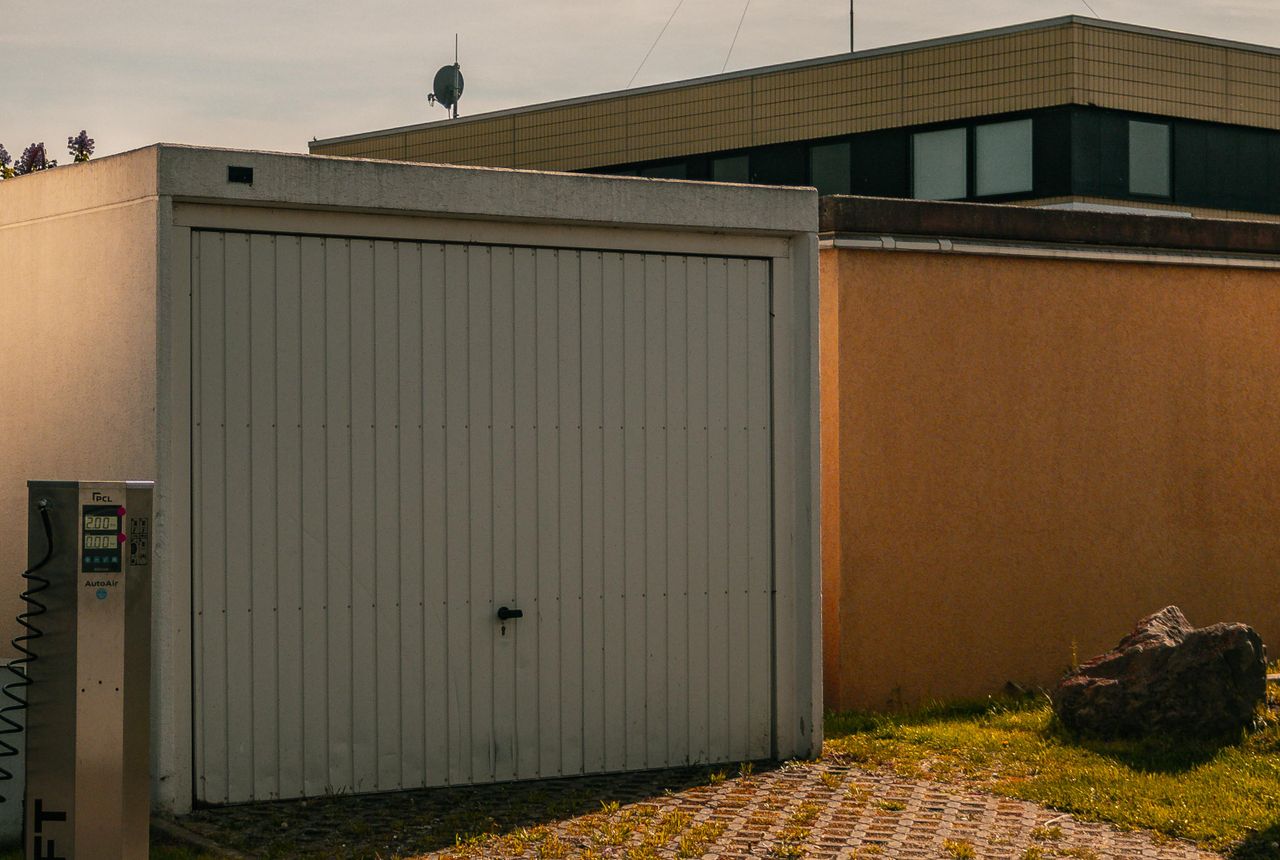
Cottonwood sits in a climate band the federal data flags as severe heat, and that matters more for a garage door than most owners think. Steel panels expand and contract every day the sun hits them, and a torsion spring wound tight on a hot afternoon doesn't behave the same as one wound in the cool of the morning. Nylon rollers get brittle. Lubricant that would hold up fine somewhere milder cooks off the track faster here and leaves metal grinding on metal. Weatherstrip and bottom seals split from UV exposure well before they wear out mechanically. None of this is dramatic - it's slow wear, the kind that shows up as a door that's noisier than it was last year, or an opener that strains a little more on the up-cycle. A service call in this town spends real time on heat-related wear because the climate here pushes those parts harder than a moderate one would. That's not a sales pitch, it's just what severe heat does to steel, springs, and rubber over years of exposure.
Most of the housing stock we work on went up between 1979 and 1999, with the median build year landing around 1988. That's the era of doors, openers, and track hardware we see on the truck day to day - not the newer insulated steel sectional doors with modern safety sensors, and not the older wood doors from before that either. A door and opener installed when a house was built in 1988 has had roughly three and a half decades of cycling, and in a severe-heat climate that clock runs faster than it would somewhere milder. We cover ground from Clarkdale, about three miles out, to Pine, forty miles out, and the housing age isn't uniform across that whole stretch - some pockets skew closer to 1980, some closer to the late 1990s. That range changes what we expect to find under the hood: early torsion spring systems bolted to hardware nobody stocks new anymore, versus later-era setups closer to what's sold today. The service call starts by figuring out which era we're actually looking at.
The most common mistake we see is an owner replacing an opener but leaving the original springs alone because the door still lifts fine. A spring wound in 1988 and cycled through three decades of severe summer heat doesn't fail gracefully - it fails suddenly, usually snapping, and often takes a cable or the bottom bracket with it. The second mistake is treating a noisy door as a lubrication problem when the actual cause is worn rollers or a track that's shifted slightly out of plumb from years of thermal expansion and contraction. Owners lube the noise away for a few weeks and the underlying wear keeps going. The third is assuming a service call means a full door replacement. With a median household income of $60,848 across the service area and most owners here owning rather than renting, replacement isn't always the right call financially or mechanically - a spring, cable, or roller swap on original-era hardware often solves the problem without touching the door itself. We'll tell you when it's actually worth replacing and when it isn't.
Before you call, look at three things. First, the spring - if your door was installed with the house and that's anywhere near 1988, the torsion spring is well past the point where waiting makes sense in this heat. Second, the bottom seal and weatherstrip; if you can see daylight or the rubber's cracked and stiff rather than flexible, UV and heat have already broken it down. Third, listen for grinding versus a clean roll - grinding usually means a roller or bearing, not the opener itself. One honest limitation: if your track hardware is original to a late-1970s or 1980s install, some of those parts are no longer made in the original spec, and a repair can mean adapting newer hardware to old brackets rather than a drop-in swap. That adds time to the job and it's not always a same-day fix. We'd rather tell you that up front than promise a part we'd have to order twice. Across 22,388 households in this area, that's the reality for a good share of the doors we're called out to.
If your house was built anywhere near the 1988 median for this area and the spring has never been replaced, it's operating well past what anyone would call a comfortable service life, especially after repeated cycling through severe summer heat. We'd rather replace it on a scheduled call than have you find out on a Saturday when it snaps mid-lift.
Steel expands in heat, and in a severe-heat climate that expansion is more pronounced than it would be somewhere milder. Combined with rollers that have gotten brittle over years of sun exposure, that shows up as extra noise on hot afternoons even when nothing has technically failed yet.
Yes, our service area runs from Clarkdale about three miles out to towns as far as Pine, roughly forty miles out, along with Cornville, Lake Montezuma, Chinle, Dewey-Humboldt, Chino Valley, Mayer, Munds Park, Williamson, Kachina Village, Mountainaire, and Strawberry.
Call now or request a free quote - same-day service on most repairs, upfront written pricing.