
Garage Door Service in Dewey Humboldt
Garage Door Service for Dewey-Humboldt's 1990s Housing Stock
Most Dewey-Humboldt homes date to the early 1990s, so the springs, openers and tracks we see out here differ from the older stock closer to Cottonwood. Here's what that means for repairs.
- Licensed & Insured
- Same-Area Service Calls
- Upfront Pricing
What Happens When You Call
-
1
Call or Request a Quote
Tell us what the door is doing and roughly how old the house is - that alone points us toward the likely part before a truck leaves.
-
2
On-Site Diagnosis
A tech checks the spring, cables, tracks, and opener in person and tells you plainly what is actually wrong.
-
3
Straight Price, No Surprises
You get a number before any work starts. It covers parts and labor, nothing added after the fact.
-
4
Fixed the Same Visit
Most repairs are done in one trip. If a part needs sourcing, we tell you that upfront instead of guessing.
What the Fix Involves
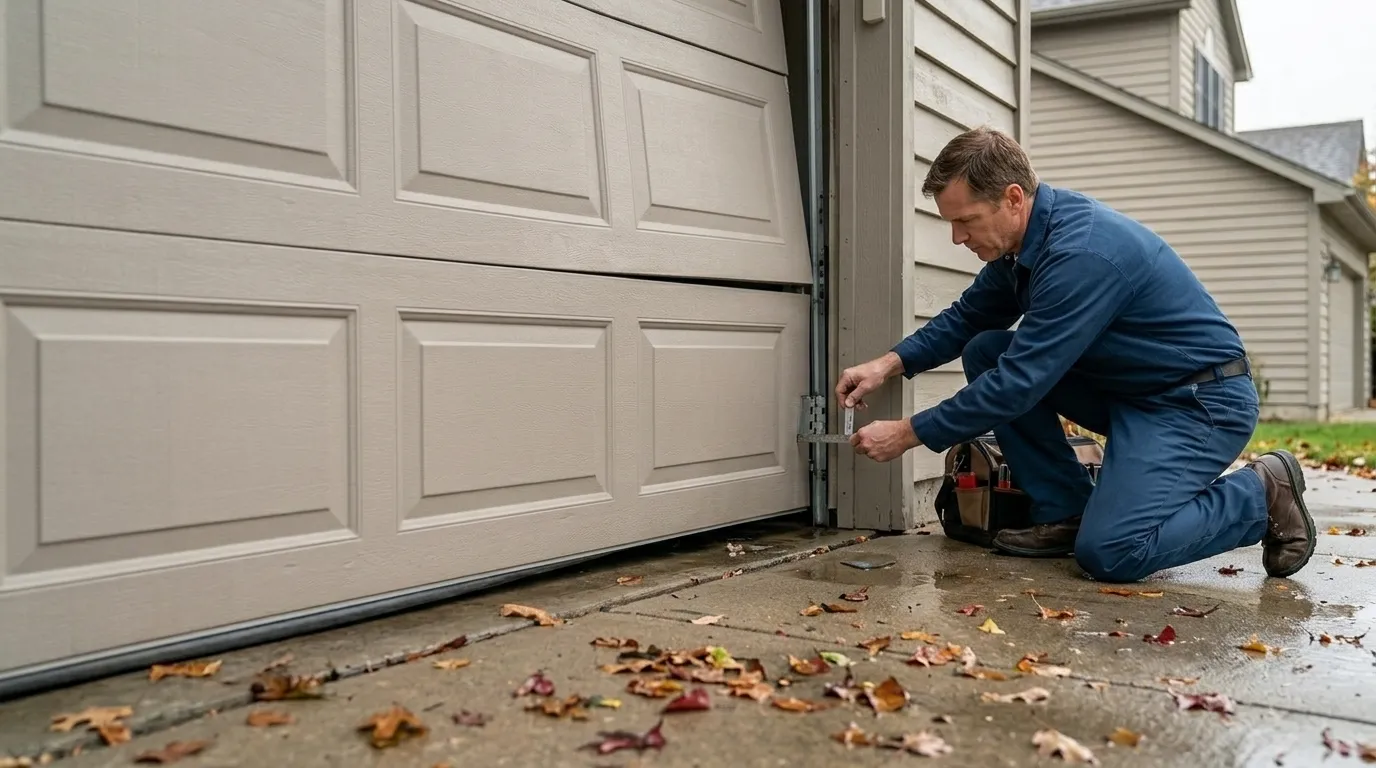
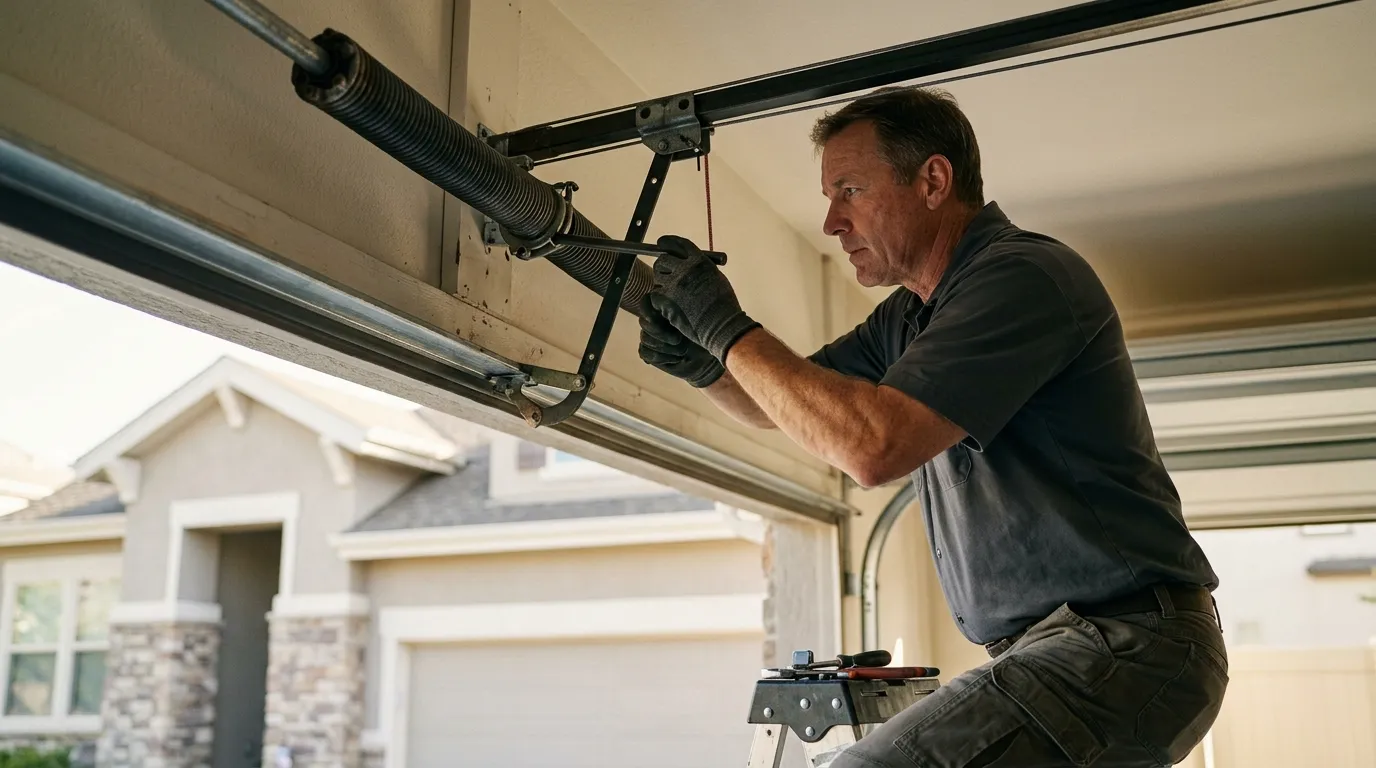
Most houses in Dewey-Humboldt went up around 1992, which puts the typical door and opener squarely in the early torsion-spring era - steel sectional doors on torsion hardware mounted above the opening, paired with chain or belt-drive openers that were standard through the '90s. That's a different animal from the older side-mounted extension-spring setups you find on houses built before the 1980s. A fix here usually means matching a torsion spring to a door that's now over thirty years old, checking whether the drums and cable are original, and testing an opener whose logic board and safety sensors may predate the photo-eye requirements added later in that decade.
We also look at the track alignment, since steel track from that era wasn't galvanized as heavily as what ships today, and rust at the mounting brackets is common once a door's been through enough summers. The work itself - spring swap, cable replacement, opener sensor upgrade - is routine. The part that takes judgment is knowing which pieces on a 1992-era door are original and which have already been patched by a previous owner or a prior repair.
Can You Do This Yourself
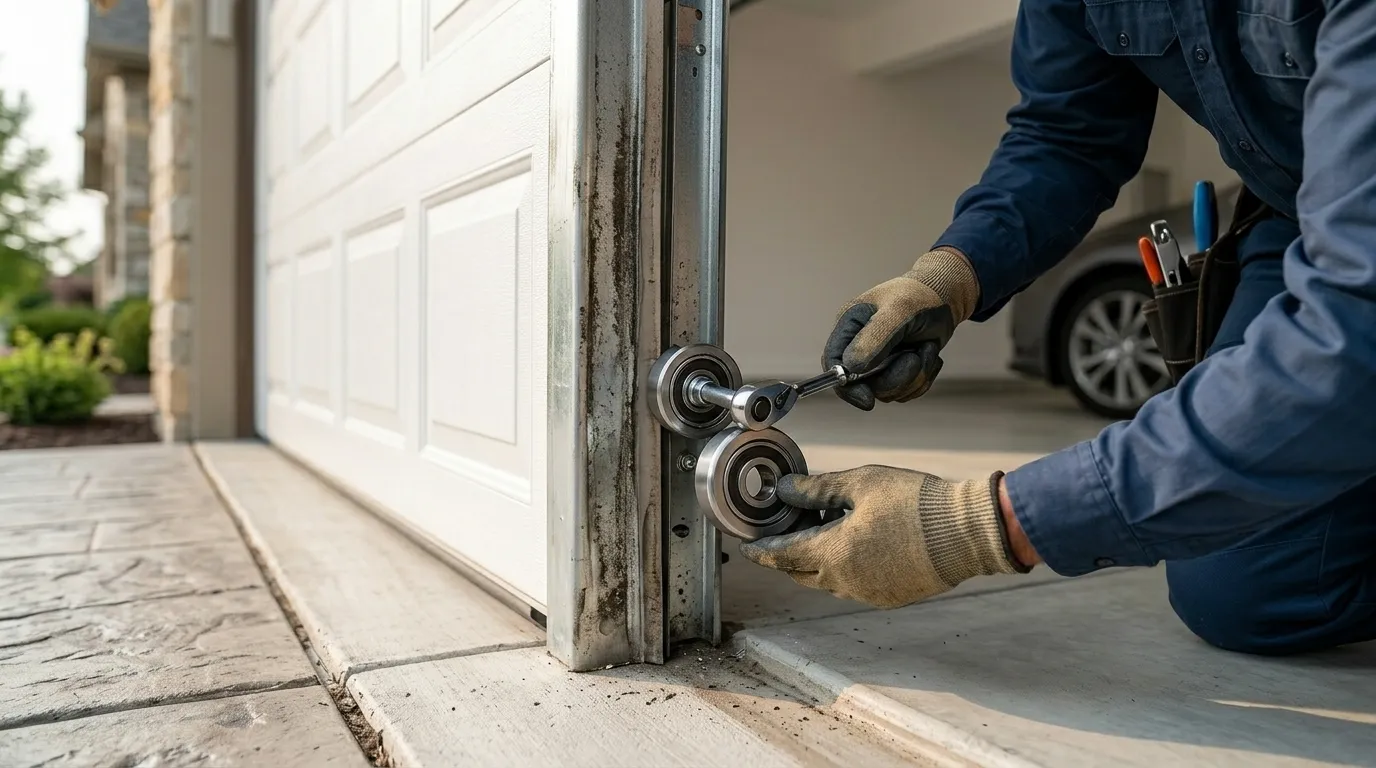
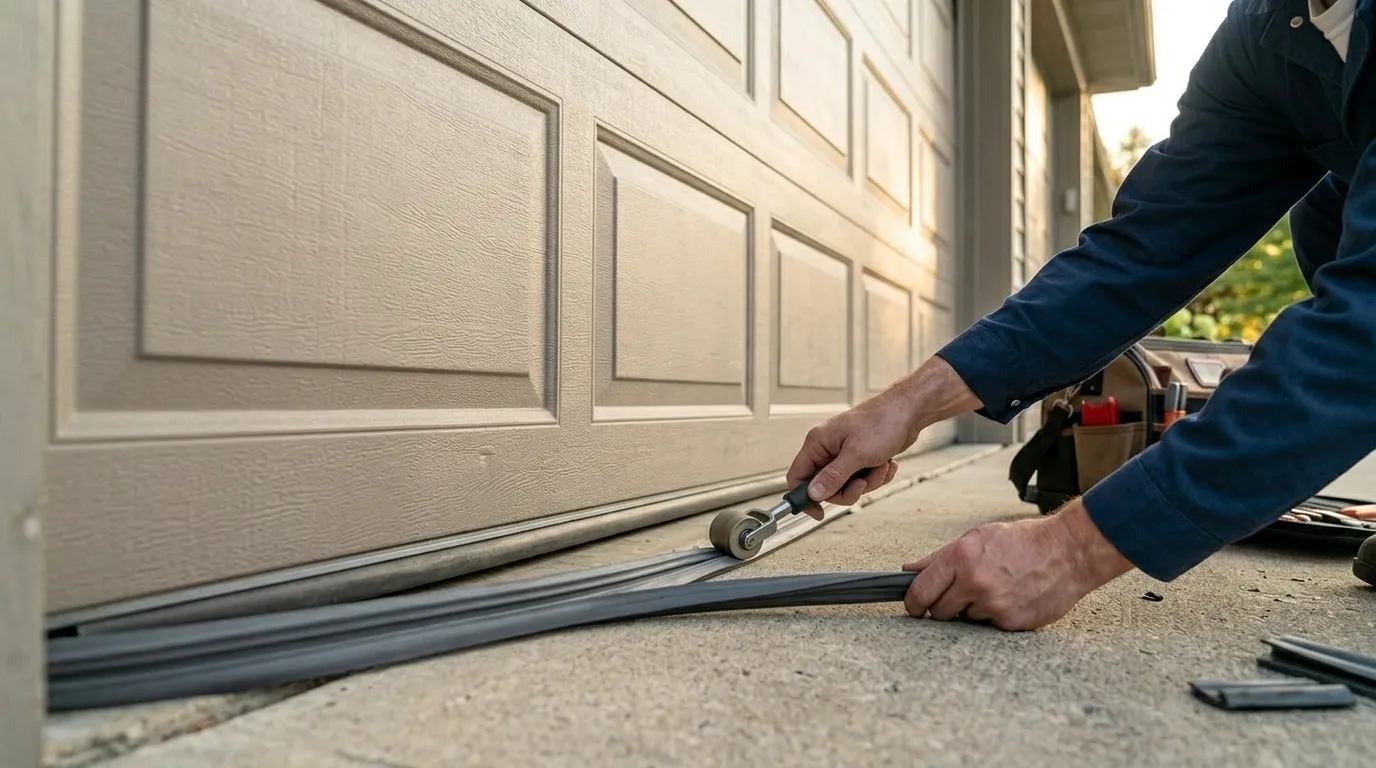
A torsion spring under full tension can put someone in the hospital, and that risk doesn't change with the door's age. If the fix is cosmetic - a bent bottom panel, a squeaky roller, weatherstripping - a homeowner with basic tools can handle it safely. If it's the spring, the cable, or anything on the opener's high-voltage side, that's not a DIY afternoon.
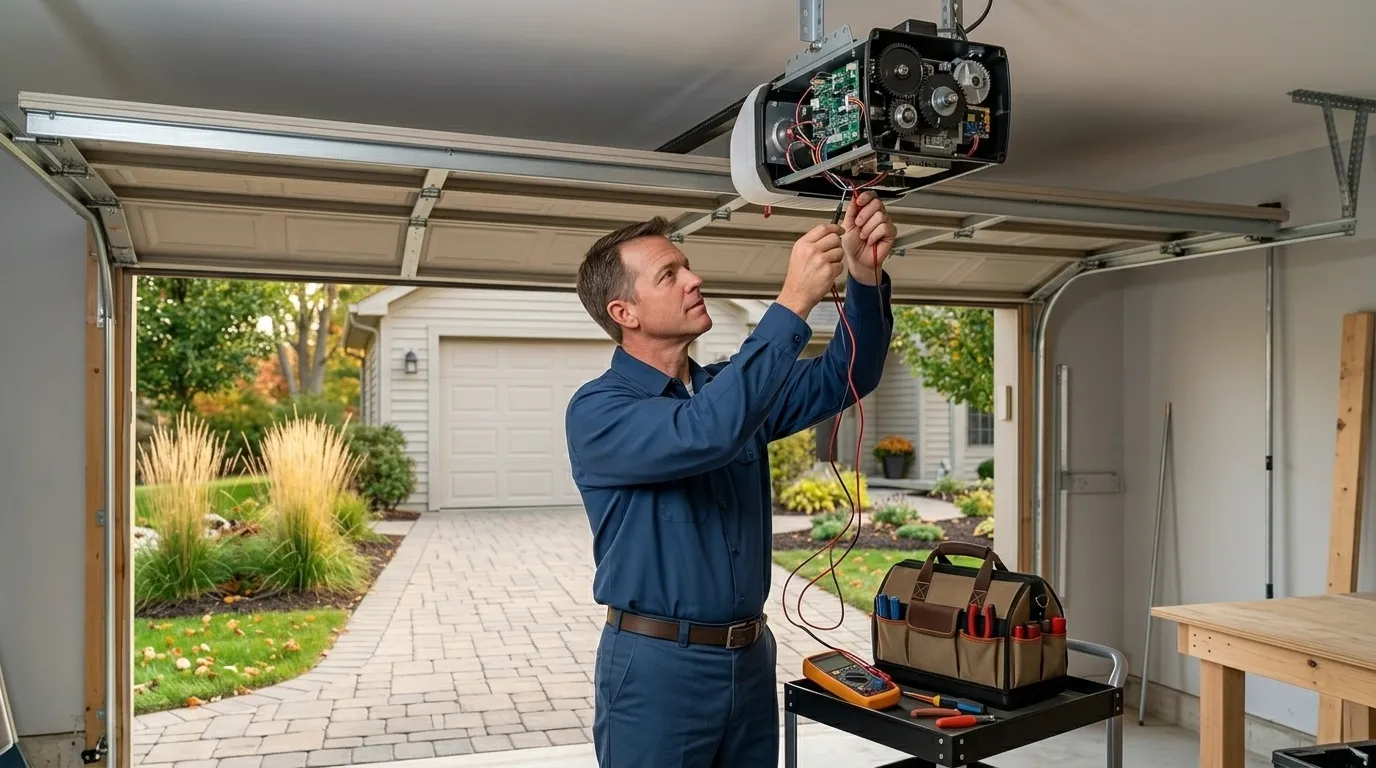
Doors from the early '90s often have springs that were never re-wound to spec after a prior repair, which means the tension on the bar isn't always what the sticker says it should be. Guessing wrong on a spring that's already been swapped once is worse than guessing wrong on an untouched original. Openers from this era are simpler than current models, so diagnosing a dead opener - checking the wall switch, the wiring to the header, the capacitor - is within reach for someone comfortable with basic electrical work.
Replacing the opener itself, once you're past the diagnosis, is more a matter of patience than skill, but running new bracing to the header on an older ceiling structure is where people get into trouble.
The Complications
The households out here number around 1,701, which is a small enough footprint that we don't stock a separate parts inventory for Dewey-Humboldt - everything comes out on the truck from Cottonwood, twenty miles up the road. That's fine for common torsion springs and standard opener parts, but if a door needs an odd-length track section or a panel that matches a discontinued color from a builder's original run in the early '90s, that part may need to be special-ordered rather than pulled off the shelf. We tell people this up front rather than promising a same-day panel match we can't back up.
The other complication is diagnosis by phone: a lot of these doors have had at least one prior repair, sometimes by a different company, and what looks like a spring problem over the phone turns out to be a cable that was reused when it shouldn't have been. We'd rather look at the door than guess at a fix based on symptoms alone.
Why This Fails Locally
Heat here runs severe through the summer, and that matters more for 1990s hardware than it does for a new door. Grease-packed bearings and steel springs from that era don't hold up to repeated heat cycling the way current sealed components do - the lubricant thins, the spring coils lose a little tension each summer, and the failure shows up as a door that's suddenly heavier to lift by hand or an opener straining on the last foot of travel. Openers from this build period also used plastic drive gears that get brittle with age and heat; a gear that's stripped teeth is a common call once a door's opener has seen thirty summers.
None of this is unique to any one house - it's what happens to any door built to early-'90s standards after three decades of Arizona heat. The fix isn't exotic, but it's predictable enough that we usually know what we're looking at before we get the door open.
What It Costs
We don't have a published price list to quote here, and giving a number without seeing the door would be a guess, not a fact. What we can say is that cost on a typical 1990s door in Dewey-Humboldt tends to track the age of the parts involved - a spring or cable swap on original hardware is a straightforward job, while an opener replacement or a header repair adds labor because the mounting and wiring often need updating to current standards. The honest answer is that we price after a look at the door, not before, because two doors built the same year can have completely different repair histories underneath the paint.
How Long You Are Without the Door
Because the shop is twenty miles away in Cottonwood, a Dewey-Humboldt call isn't a same-day drop-in the way a job inside Cottonwood might be - we plan the drive as part of scheduling rather than treating it as incidental. Most single-door jobs, once the truck is on site, are done within a couple of hours: spring and cable work, opener swaps, and track alignment are all same-visit fixes.
The exception is when a part isn't something we carry standard - an odd track length or a panel match for an older builder color - in which case the door may sit until that part comes in. We'd rather tell a homeowner that up front than leave them guessing.
Talk to a Dewey Humboldt Technician First
Describe what the door is doing and get a straight answer on what it likely needs.
Other Garage Door Services in Dewey Humboldt
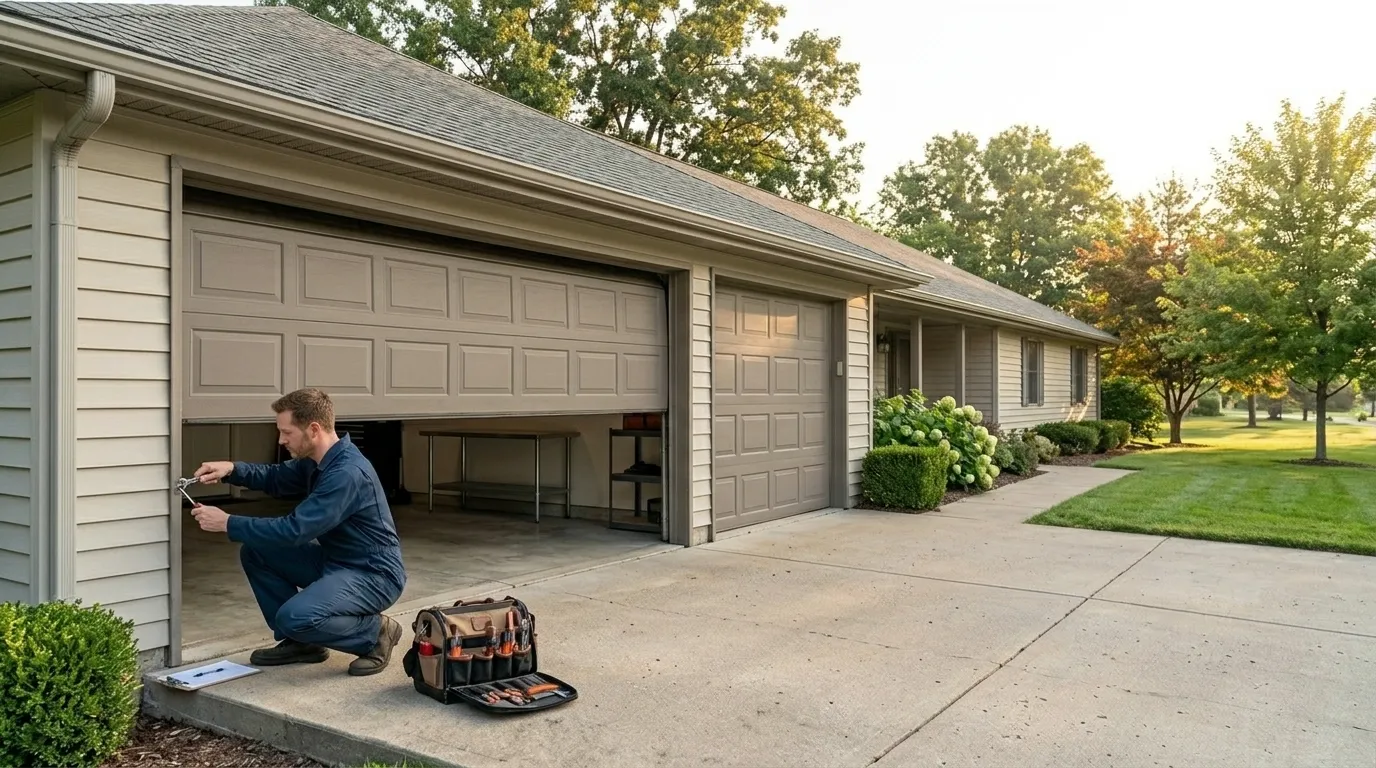
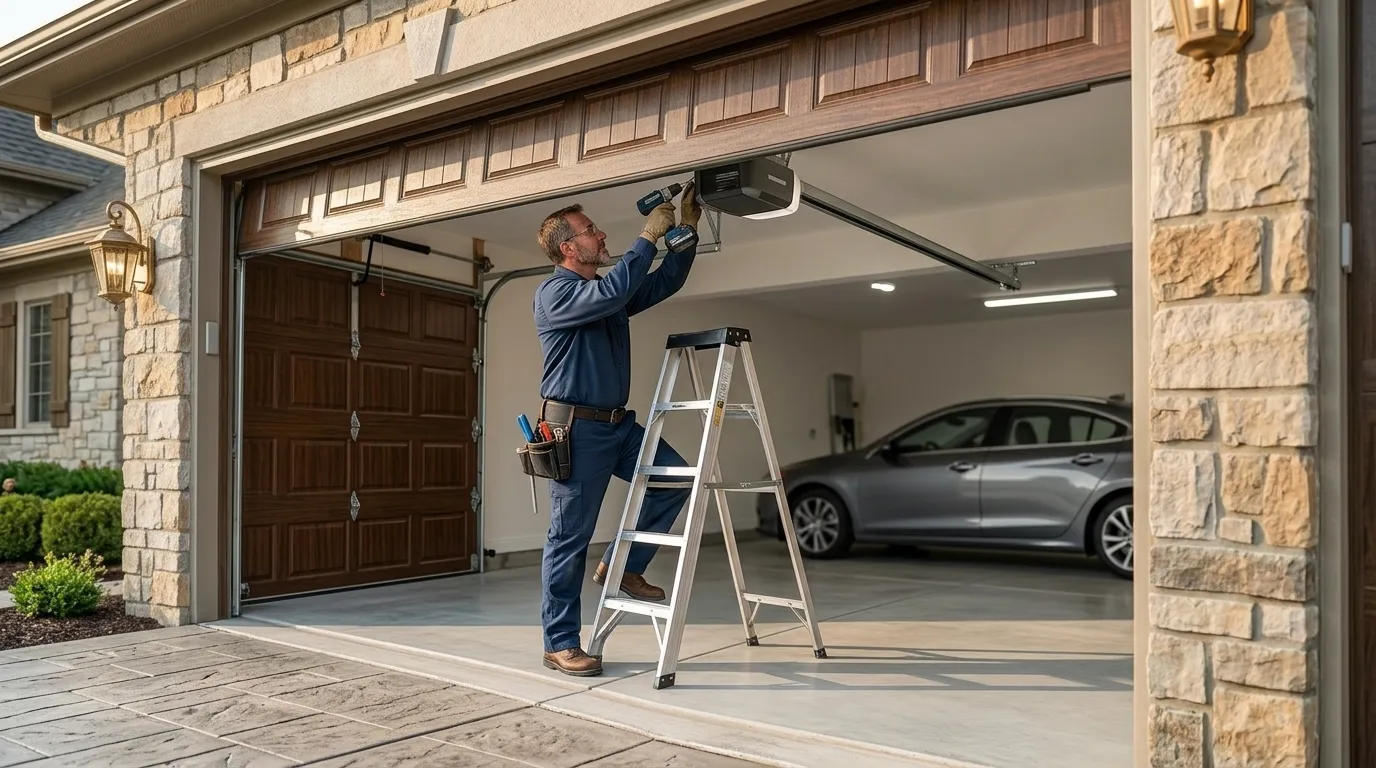
Recent Work in Dewey Humboldt
A look at jobs our crew has been on nearby.
Why Dewey Humboldt Calls Us
Frequently Asked Questions
How far out is Dewey-Humboldt from your shop in Cottonwood
About 20 miles. We treat it as a scheduled run rather than a same-day emergency stop, so we're upfront about timing when you call rather than promising something we can't deliver from that distance.
Do you carry parts for older doors out here
We carry common torsion springs, cables, and opener parts on the truck, which covers most 1990s-era doors. Odd track lengths or discontinued panel colors from an original builder run sometimes need to be special-ordered.
Is my opener too old to fix
Depends on what's wrong. A dead capacitor or worn gear is usually a fair repair. If the logic board is failing on a unit from the early '90s, replacement is often the better call than chasing parts for it.
Why does my spring keep losing tension
Severe summer heat cycles steel springs harder than mild climates do. Combined with three decades of use, that's why springs on houses built around 1992 tend to need replacement sooner than the door itself would suggest.
Need Garage Door Service in Dewey Humboldt?
Call now for straight answers on cost and timing.