
Service
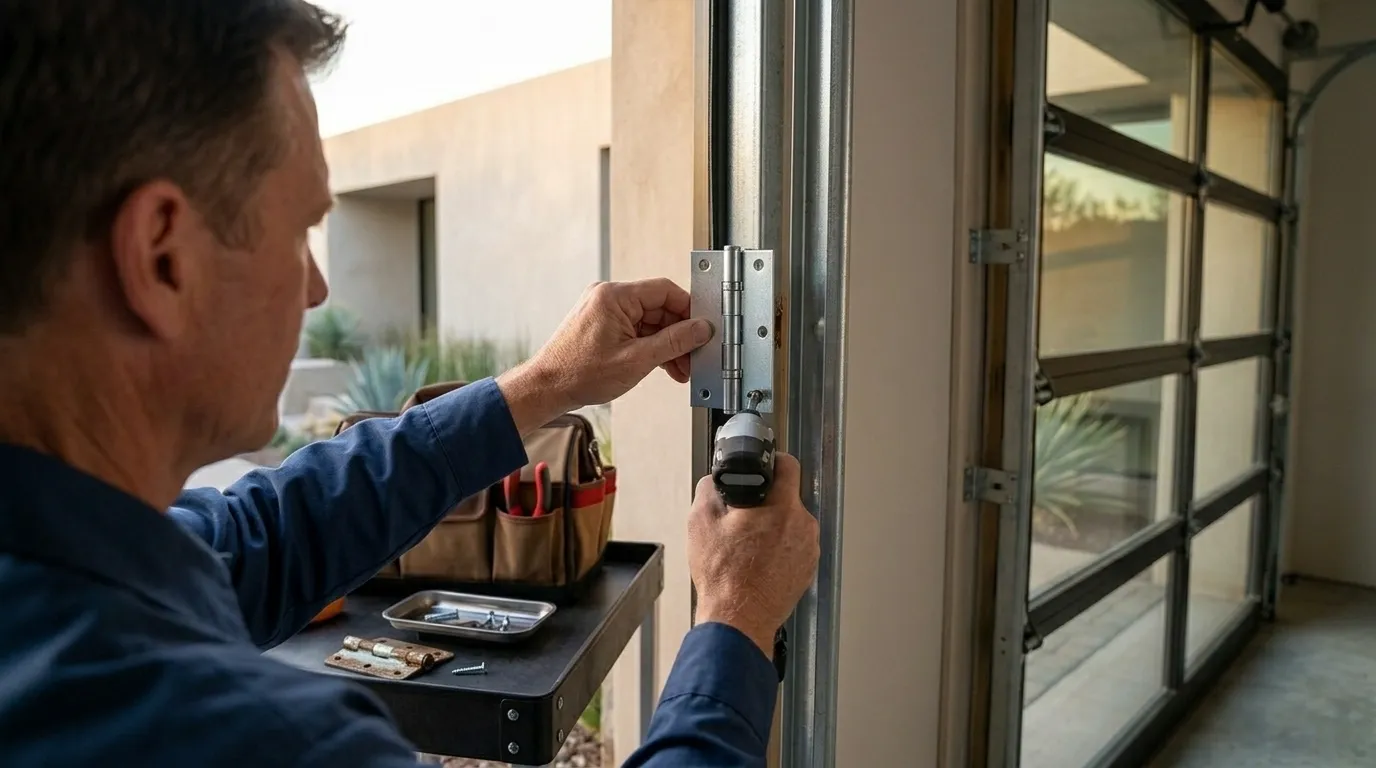
Garage Door Roller Replacement, Cottonwood AZ
Cottonwood homes built 1979-1999 run original steel rollers into brittle failure under severe desert heat. Here's what that looks like and how the fix works.
- Licensed & Insured
- Same-Area Service Calls
- Upfront Pricing
What Happens When You Call
-
1
Call or Request a Quote
Tell us what the door is doing and roughly how old the house is - that alone points us toward the likely part before a truck leaves.
-
2
On-Site Diagnosis
A tech checks the spring, cables, tracks, and opener in person and tells you plainly what is actually wrong.
-
3
Straight Price, No Surprises
You get a number before any work starts. It covers parts and labor, nothing added after the fact.
-
4
Fixed the Same Visit
Most repairs are done in one trip. If a part needs sourcing, we tell you that upfront instead of guessing.
What You Are Seeing
The door catches partway up the track, or it jerks and shudders instead of gliding. You might hear a grinding or popping sound right as the door passes the bend where the track curves from vertical to horizontal - that's where a worn roller binds hardest.
Some owners notice the door walking sideways in the opening, no longer sitting flush against the weatherstrip. Others just see a roller wheel sitting on the garage floor, cracked clean through.
On houses built in the 1980s and 90s - which describes most of the stock across Cottonwood's older neighborhoods - the rollers are usually the original steel or early-generation nylon that came with the door, decades past their service life. They were never swapped because nothing else about the door failed loud enough to force the issue. The roller just got quieter and stiffer for years before it finally split or seized.
If your door came in with the house and nobody's touched the hardware since, this is close to a certainty rather than a maybe. It's one of the more predictable failures we see on original 1980s-90s track systems in this area.
Why This Fails Locally
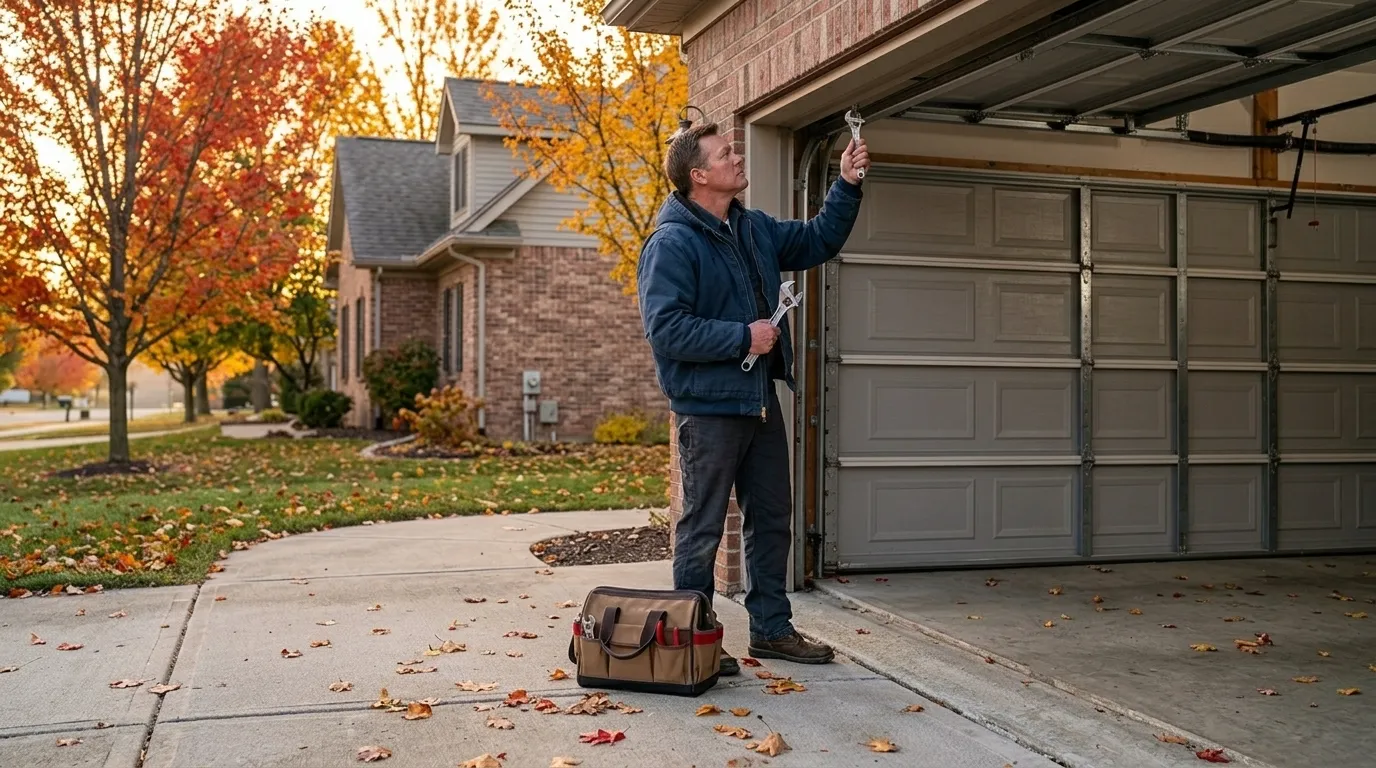
Severe summer heat is hard on the plastic in a roller wheel. Nylon rollers - common on doors installed or upgraded from the late 1980s onward - have a lubricated core and a nylon tire pressed onto a steel stem.
Heat cycles that core hard: it expands during peak afternoon temperatures, contracts overnight, and over enough years that stem loosens or the tire face cracks. Steel rollers on the oldest of Cottonwood's 1979-era doors have a different problem - the bearings dry out and rust in the same heat, then bind against the track instead of rolling through it.
Either way, the track itself doesn't move. It's bolted to a jamb built in the same era, sized for a roller that's no longer round or no longer sealed.
A roller that's even slightly out of tolerance rides the edge of the track instead of the center, and that's the grinding you hear. This isn't a defect specific to one manufacturer - it's what happens to 30-40 year old roller hardware sitting through repeated 100-plus-degree afternoons, which is most of the housing stock we work on here.
Can You Do This Yourself
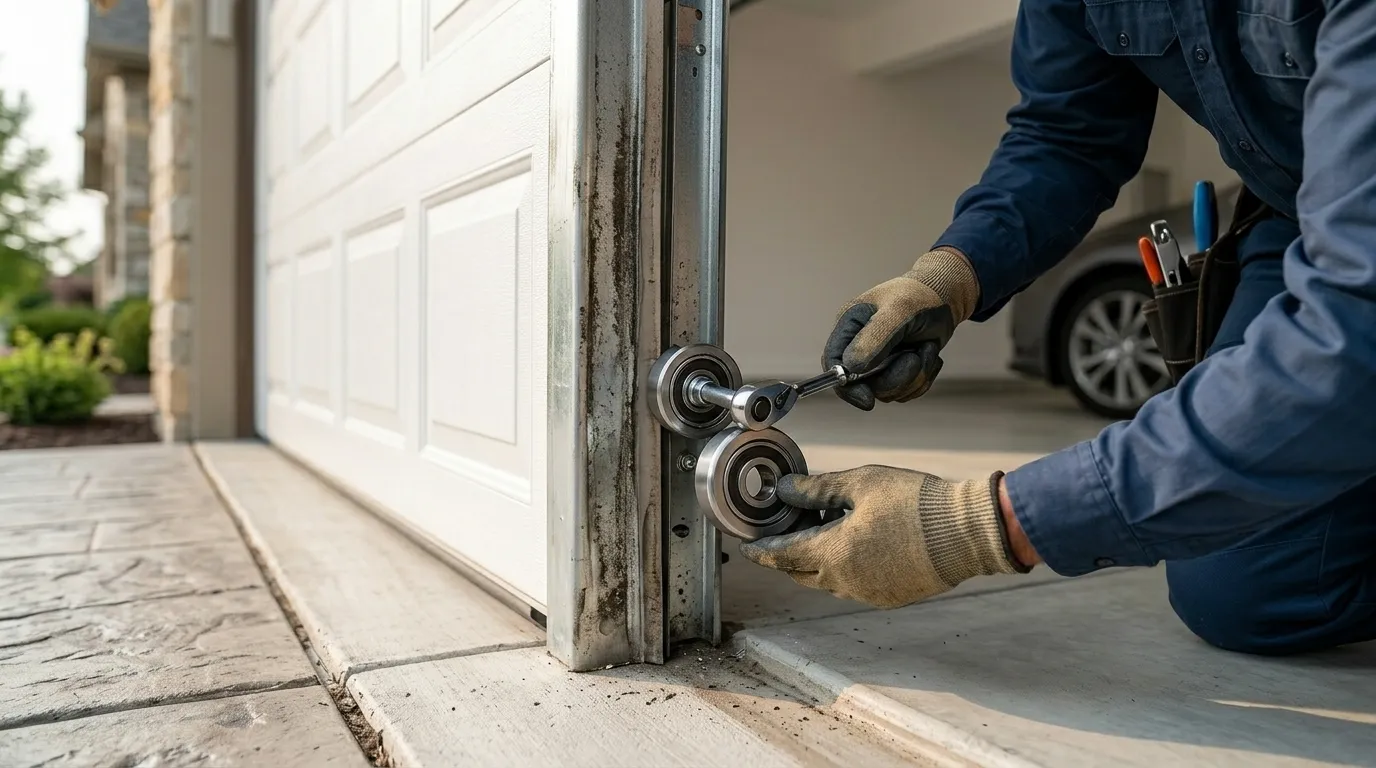
A single roller on the bottom section, with the door down and the opener disconnected, is within reach for someone comfortable with a wrench and a little patience. You're removing a hinge, sliding the old roller stem out, and setting a new one in - no spring tension involved on the bottom rollers.
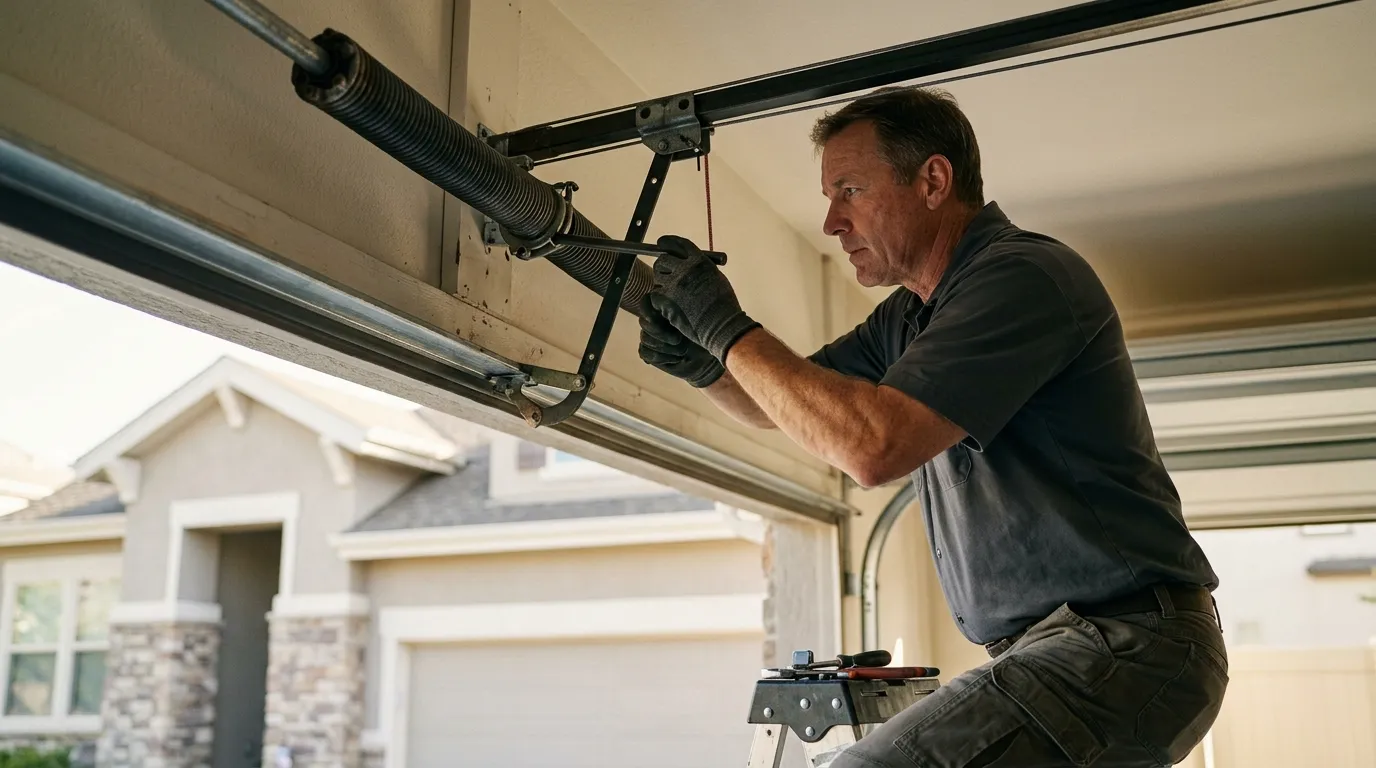
Rollers higher up the door are a different story. Getting to them means removing hinges that are under spring tension from the door's own weight, and on a torsion system that tension doesn't forgive a mistake. We don't recommend it as a DIY step, and we won't pretend it's simple to make it sound harder than it is - it's genuinely a two-person, right-tools job past the bottom panel.
One honest limitation: if the track itself is bent or the rollers have been grinding long enough to gouge the rail, a roller swap alone won't fix the noise. That's a track repair or replacement job, and we'll tell you that up front rather than sell you rollers that won't solve it.
What the Fix Involves
We pull the door down, disconnect the opener, and check every roller and hinge on the track - not just the one that's obviously failed, since a door old enough to need one roller usually needs the full set. Sealed-bearing nylon rollers stand up to the heat cycling here far better than the steel originals, so that's what we replace with unless you tell us otherwise.
We check the track alignment while we're in there, since a roller that failed from riding the rail edge often leaves the track slightly bowed at that spot. If the track's clean, it's a straightforward swap. If it's not, we'll walk you through what a track section costs to replace versus what it's worth chasing a repair on hardware from the 1980s or 90s.
We run the door through a full cycle afterward, watching and listening for anything still catching, then check the balance since new rollers change how the door sits on the track slightly.
Talk to a Technician Before You Book
Describe what the door is doing and get a straight answer on what it likely needs.
Jobs Like Yours
Recent work from this service line.
Why Cottonwood Calls Us
Frequently Asked Questions
How many rollers usually need replacing at once?
On a standard door that's typically ten rollers total. If one has failed from age or heat, the rest are usually close behind on a house from the same era, so we generally replace the full set rather than one at a time.
Are nylon rollers better than steel for Cottonwood's climate?
Yes. Sealed nylon rollers handle the daily heat swing better than the original steel wheels found on 1979-era doors, which tend to dry out and rust in the bearing under repeated high-heat afternoons.
Can a bad roller damage the track?
Yes, if it's left grinding long enough. A cracked or seized roller rides the edge of the rail instead of the center, and over weeks that can bow the track at that spot, turning a roller job into a track repair.
Need Garage Door Roller Replacement, Cottonwood AZ?
Call now for straight answers on cost and timing.