
Service
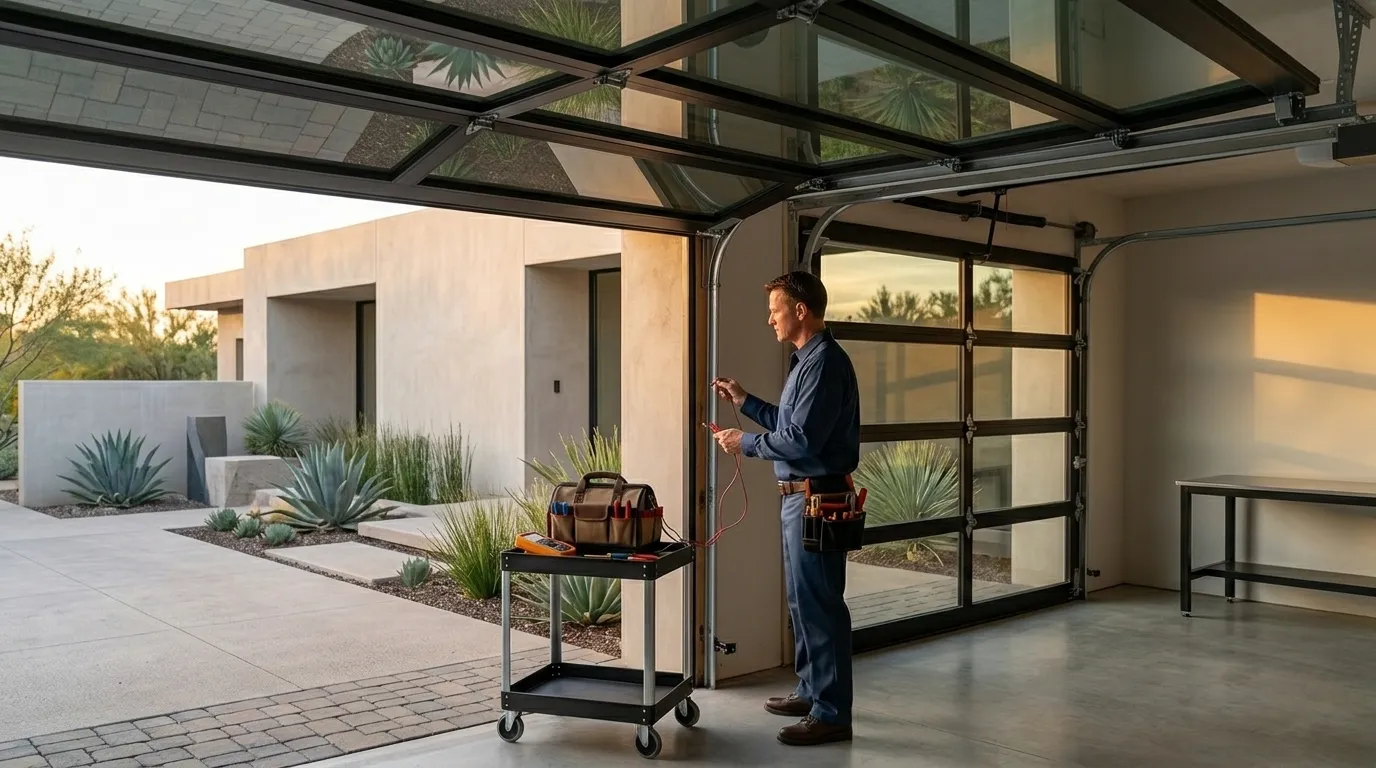
Keeping Commercial Doors Running Through Cottonwood's Heat
Commercial garage door repair for Cottonwood, AZ businesses, built to handle severe summer heat and covering communities from Clarkdale to Pine, Arizona.
- Licensed & Insured
- Same-Area Service Calls
- Upfront Pricing
What Happens When You Call
-
1
Call or Request a Quote
Tell us what the door is doing and roughly how old the house is - that alone points us toward the likely part before a truck leaves.
-
2
On-Site Diagnosis
A tech checks the spring, cables, tracks, and opener in person and tells you plainly what is actually wrong.
-
3
Straight Price, No Surprises
You get a number before any work starts. It covers parts and labor, nothing added after the fact.
-
4
Fixed the Same Visit
Most repairs are done in one trip. If a part needs sourcing, we tell you that upfront instead of guessing.
What You Are Seeing
A commercial overhead door that used to roll smooth now hangs up halfway, or the opener trips its overload switch every time the sun's been on the wall for a few hours. On a two-door bay you'll see one leaf sagging a quarter inch out of line with the other. Photo-eye sensors that closed the door fine at 7am start refusing to see each other by 2pm.
None of this is random. It's the same handful of failure points showing up again and again on the commercial doors we get called to across this service area: torsion springs losing tension unevenly, steel track pulling out of square, and drive belts or chains stretching faster than the manual says they should. If you run a shop, warehouse, or fleet bay and you're noticing the door behaving differently morning versus afternoon, that's the pattern worth paying attention to, not a coincidence.
Why This Fails Locally
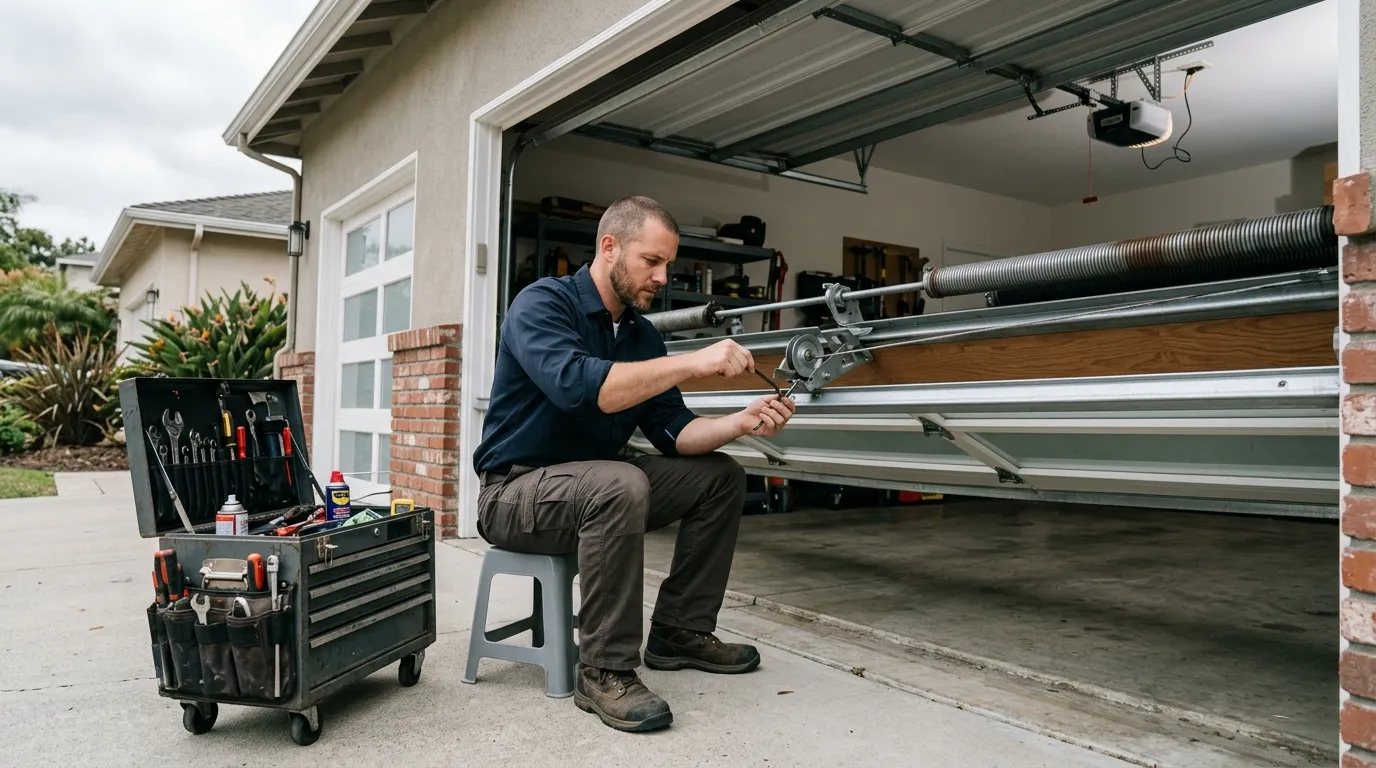
This part of Arizona sits in a climate band rated severe for heat, and that single fact drives most of the commercial door calls we take. Steel expands. A 16-foot commercial sectional door with tight tolerances at install can bind against its own track once the panels heat up and grow a fraction of an inch across their width.
Lubricant on rollers and hinges that's rated for moderate climates thins out and runs off the metal instead of staying put, so bearings run dry by midafternoon even though they looked fine that morning. Opener logic boards, especially older ones mounted right against a metal door header, sit in the hottest air in the building and shut themselves down as a heat-protection measure rather than fail outright - which is why the fault seems to come and go. None of that is a defect in the door.
It's a door built to a spec that doesn't account for the number of 100-plus-degree days this stretch of the state actually sees, and it's the reason a door that runs fine in a mild climate needs different service intervals here.
Can You Do This Yourself
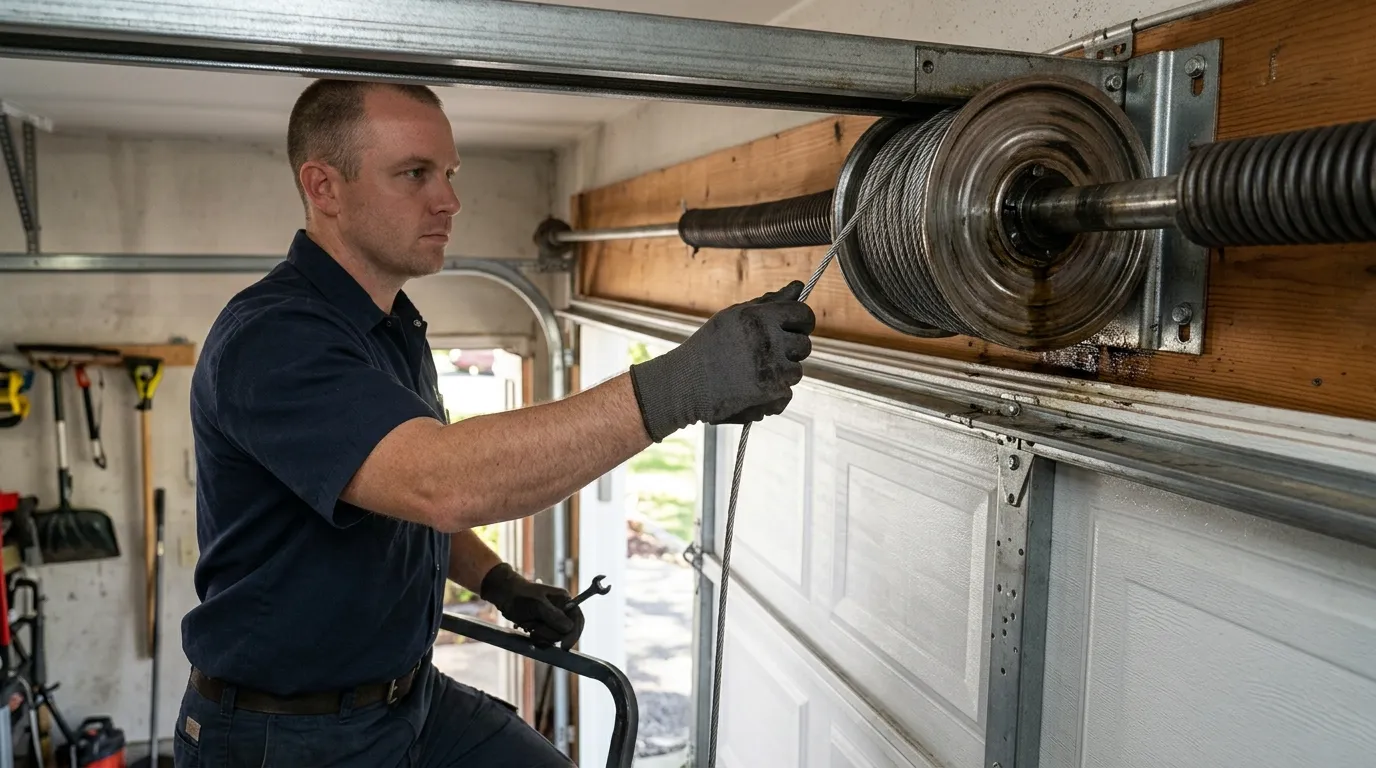
Some of this is genuinely DIY. You can check and clean photo-eye lenses, re-tighten loose track brackets you can reach from a ladder, and swap a high-temperature lithium grease onto rollers instead of a generic all-purpose one. Those three things alone fix a surprising share of the afternoon-only faults we get called about.
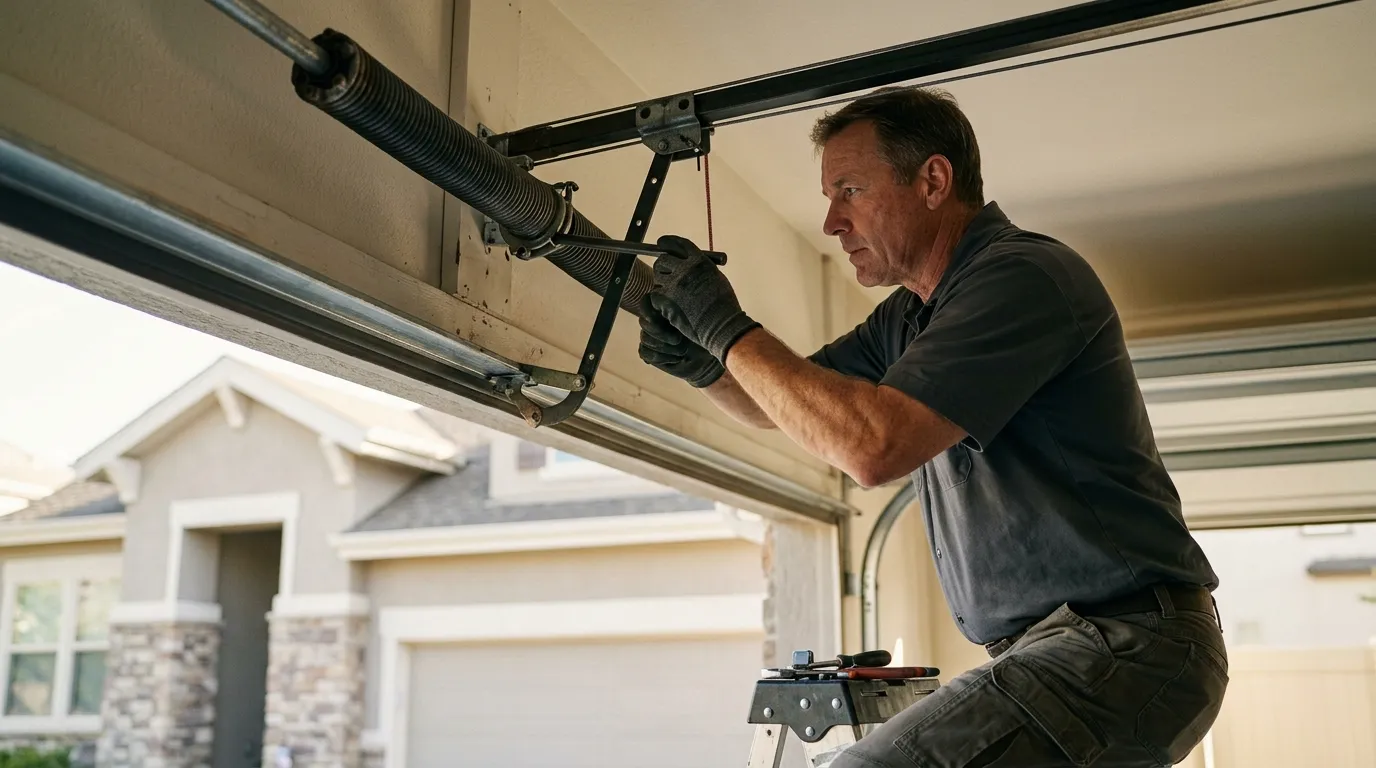
What you shouldn't touch is anything on the spring side of a commercial door. Torsion springs on a door this size hold enough stored force to break a bone or worse if the winding bar slips, and heat-fatigued springs let go with less warning than you'd expect. Same goes for opener logic board diagnosis - if it's tripping on heat, the fix is usually airflow or a heat-rated board, not a reset, and guessing wrong means a callback with the same fault next week.
Honest limitation: we don't stock every proprietary logic board for older commercial openers, so a non-standard unit sometimes means a special order and a few days' wait, not a same-visit fix.
What the Fix Involves
A commercial service call starts with running the door through a full open-close cycle cold, then again after it's had a chance to sit in the sun, because that's the only way to catch a heat-triggered fault instead of guessing at it. From there it's track alignment checked with a level, spring tension checked and rebalanced side to side rather than just tightened, and a switch to grease rated for high-temperature service on every moving point.
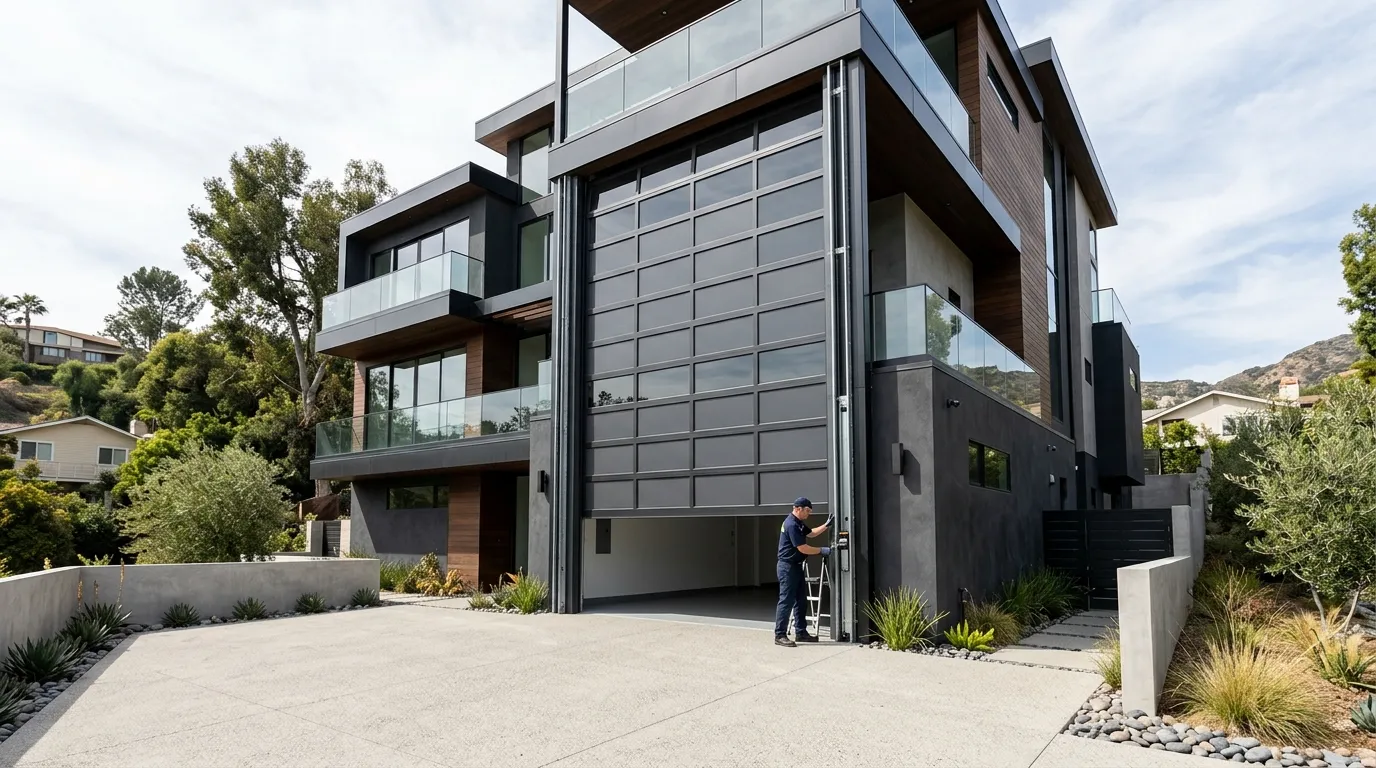
Opener boards that are shutting down get relocated or shielded from direct sun where the mounting allows it; where it doesn't, a heat-rated replacement board is the straightforward answer. We cover this service across the wider area - from Clarkdale three miles out to Pine forty miles out, with Cornville, Lake Montezuma, Chinle, Dewey-Humboldt, Chino Valley, Mayer, Munds Park, Williamson, Kachina Village, Mountainaire, and Strawberry in between - and dispatch time on a commercial call depends on where in that range the job sits, which is worth knowing before you call expecting the same window regardless of address.
Talk to a Technician Before You Book
Describe what the door is doing and get a straight answer on what it likely needs.
Jobs Like Yours
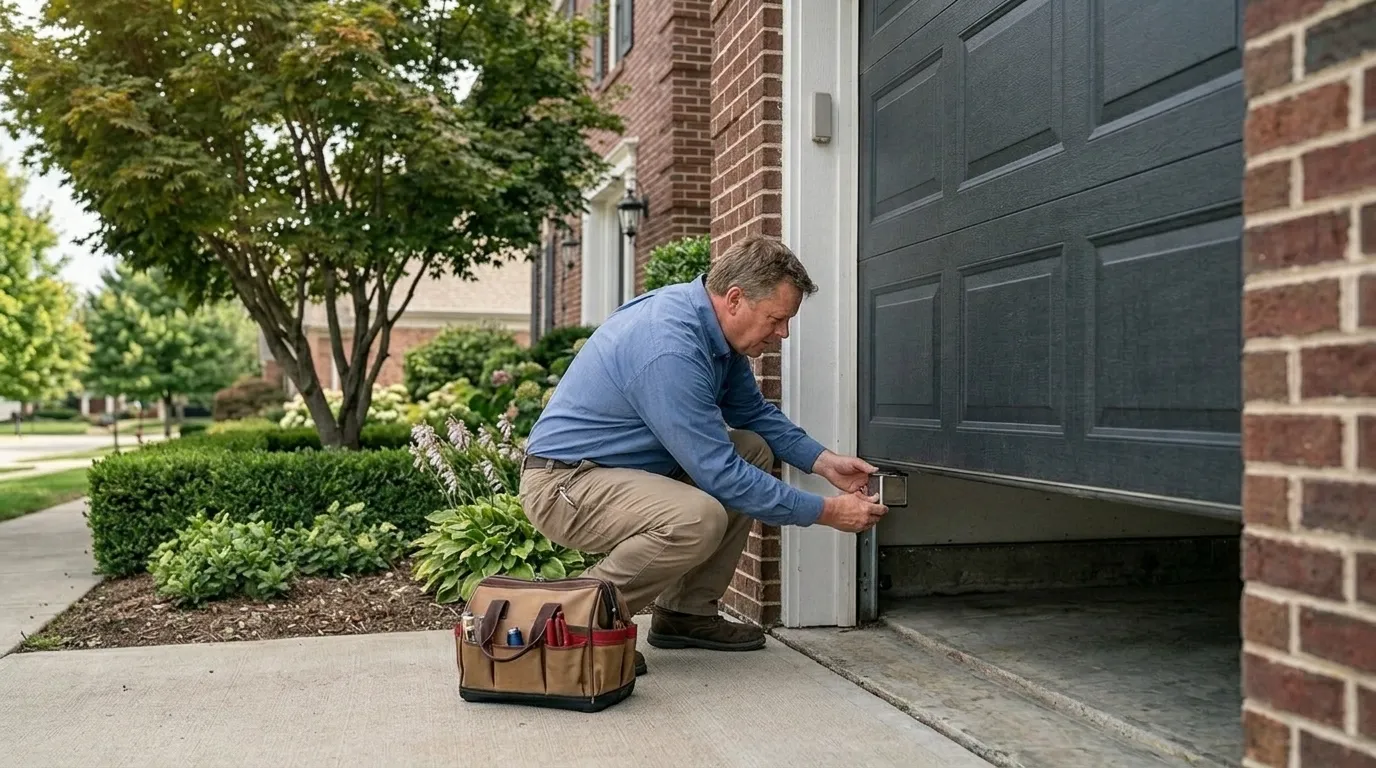
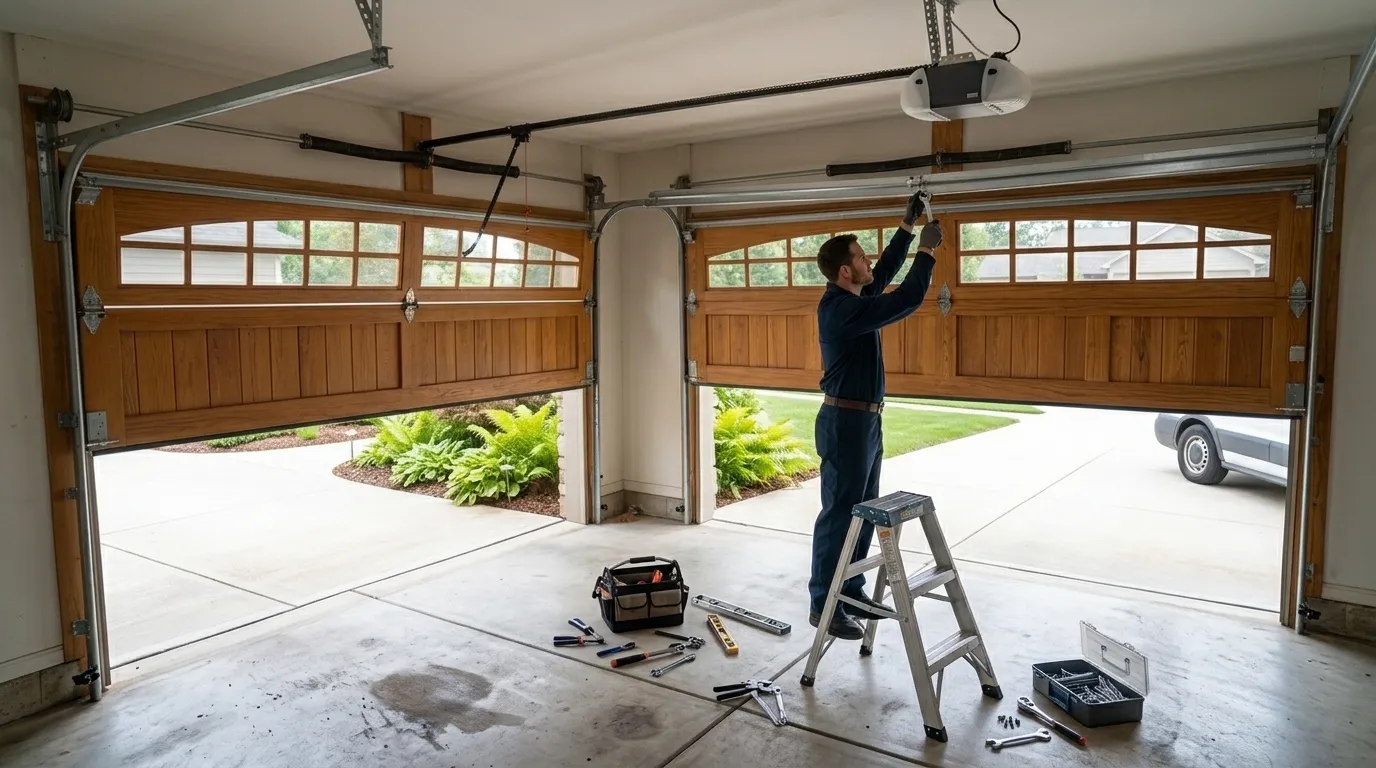
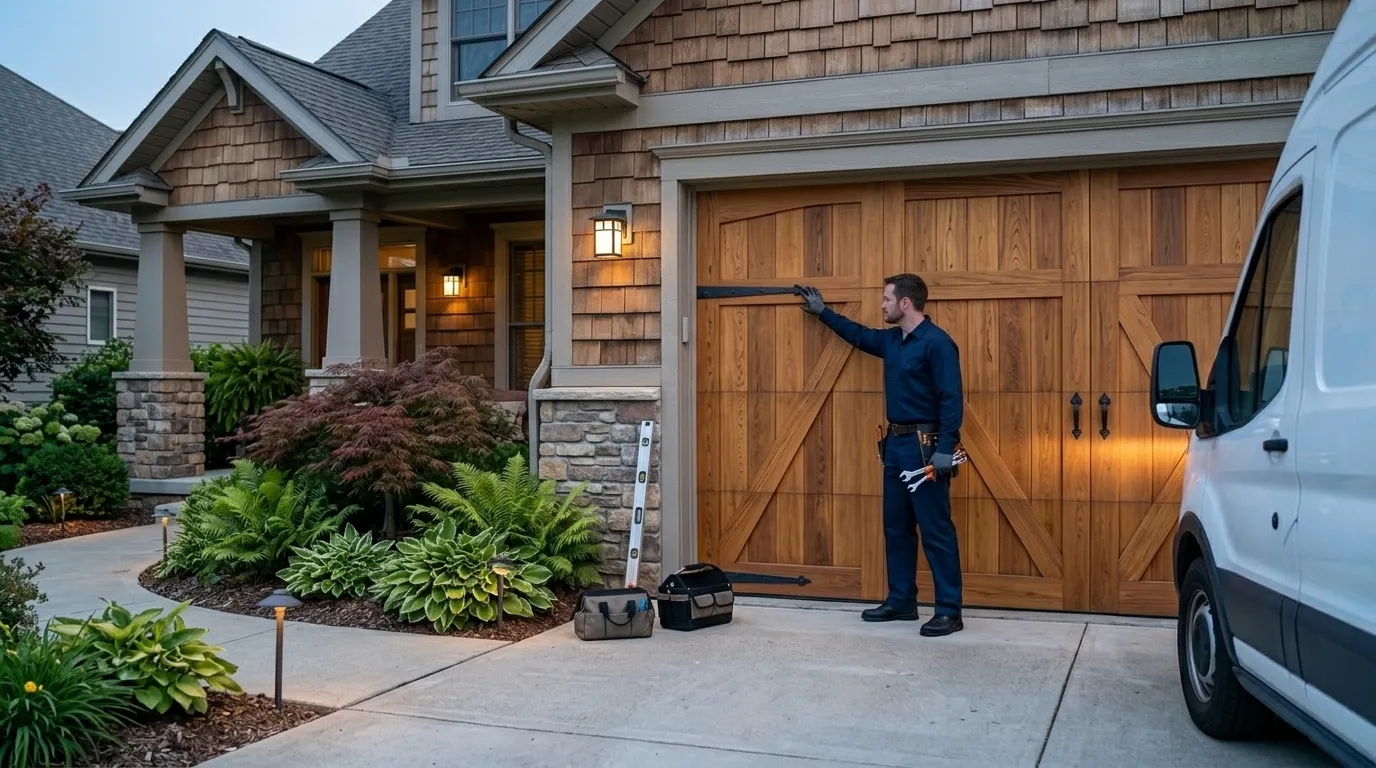
Recent work from this service line.
Why Cottonwood Calls Us
Frequently Asked Questions
Why does our shop door only jam in the afternoon?
Heat. Steel panels and track expand as the day warms up, and if the door was set with tight tolerances it can bind once everything's a fraction of an inch larger. Openers mounted against a hot metal header can also trip a heat-protection shutdown that looks identical to a jam. A morning-versus-afternoon test cycle usually confirms it.
How often should a commercial door get serviced here?
We don't have a universal number that fits every door and every business, but given the severe heat rating for this area, commercial doors here need more frequent lubrication and spring-tension checks than the same door would in a milder climate. Ask about a schedule specific to your door's age and use.
Do you service commercial doors outside Cottonwood itself?
Yes, across the wider area from Clarkdale at three miles to Pine at forty miles, with several communities in between. Dispatch time varies with distance, so a job near the close end of that range gets a different response window than one near the far end.
Can a heat-related opener fault be fixed without replacing the whole opener?
Often, yes. Relocating or shielding the logic board from direct sun solves it in a lot of cases. Where the mounting doesn't allow that, a heat-rated replacement board is usually the fix rather than a full opener swap, though older non-standard units sometimes require a special order part.
Need Keeping Commercial Doors Running Through Cottonwood's Heat?
Call now for straight answers on cost and timing.