
Service
What a New Garage Door Opener Needs in Cottonwood, AZ
Cottonwood homes built between 1979 and 1999 often have openers that were never upgraded. See what fails, why, and what a proper opener install involves.
- Licensed & Insured
- Same-Area Service Calls
- Upfront Pricing
What Happens When You Call
-
1
Call or Request a Quote
Tell us what the door is doing and roughly how old the house is - that alone points us toward the likely part before a truck leaves.
-
2
On-Site Diagnosis
A tech checks the spring, cables, tracks, and opener in person and tells you plainly what is actually wrong.
-
3
Straight Price, No Surprises
You get a number before any work starts. It covers parts and labor, nothing added after the fact.
-
4
Fixed the Same Visit
Most repairs are done in one trip. If a part needs sourcing, we tell you that upfront instead of guessing.
What You Are Seeing
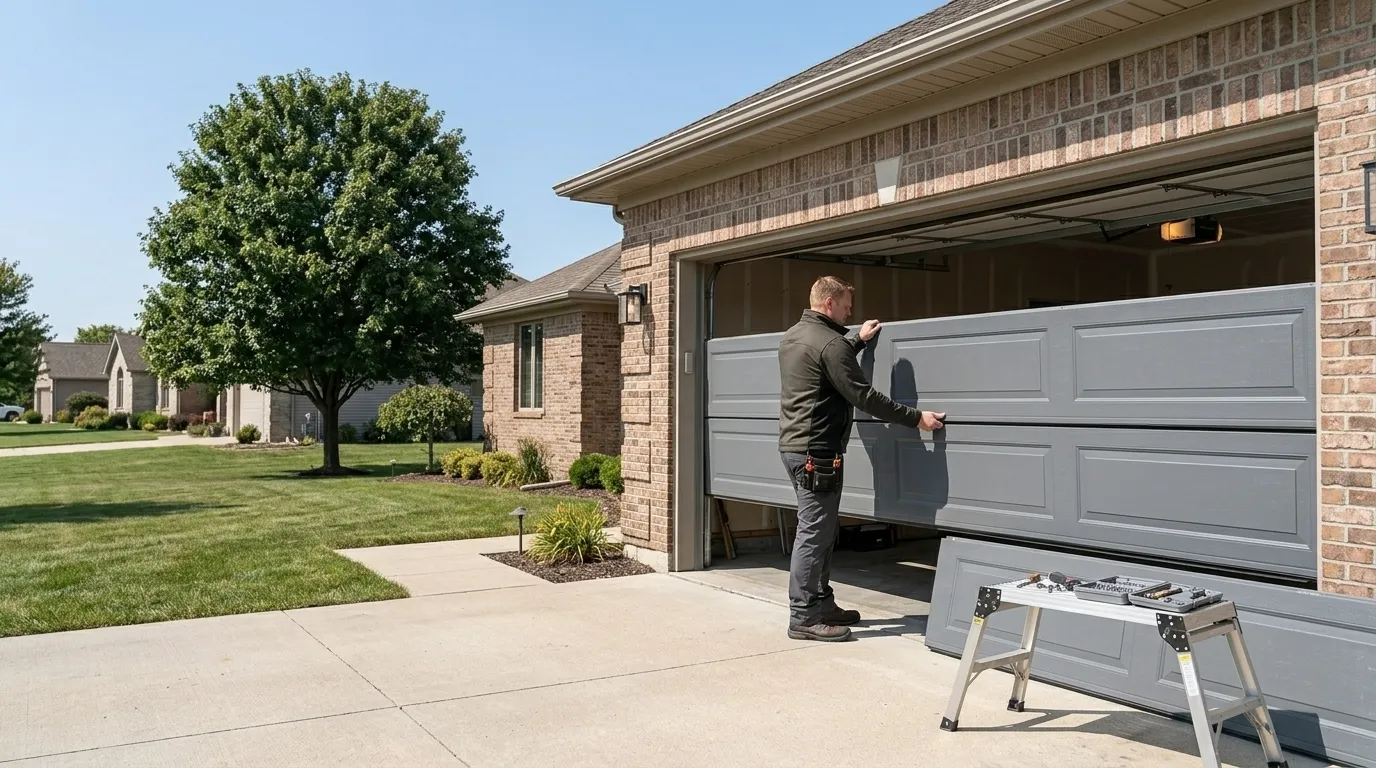
The signs usually start small. The opener grinds longer than it used to before the door moves.
The remote works from the driveway but not from the street. The light stays on, or never comes on, or the whole unit just hums and does nothing while the door sits still.
Most of Cottonwood's houses went up between 1979 and 1999, with a median build year of 1988. If your opener is original to the house, it's a chain-drive unit pushing 30 to 45 years of use, and it was never designed to run this long. Even a replacement opener installed in the 2000s is now past the point where parts inside it are reliable.
Some owners notice the door reverses for no reason, or the safety sensors blink but won't clear. Others just find the unit dead one morning with no warning.
None of this means the door itself is bad - the track, springs, and panel can be fine while the opener that drives them is the actual point of failure. Confusing the two is the most common reason people pay for the wrong repair.
Why This Fails Locally
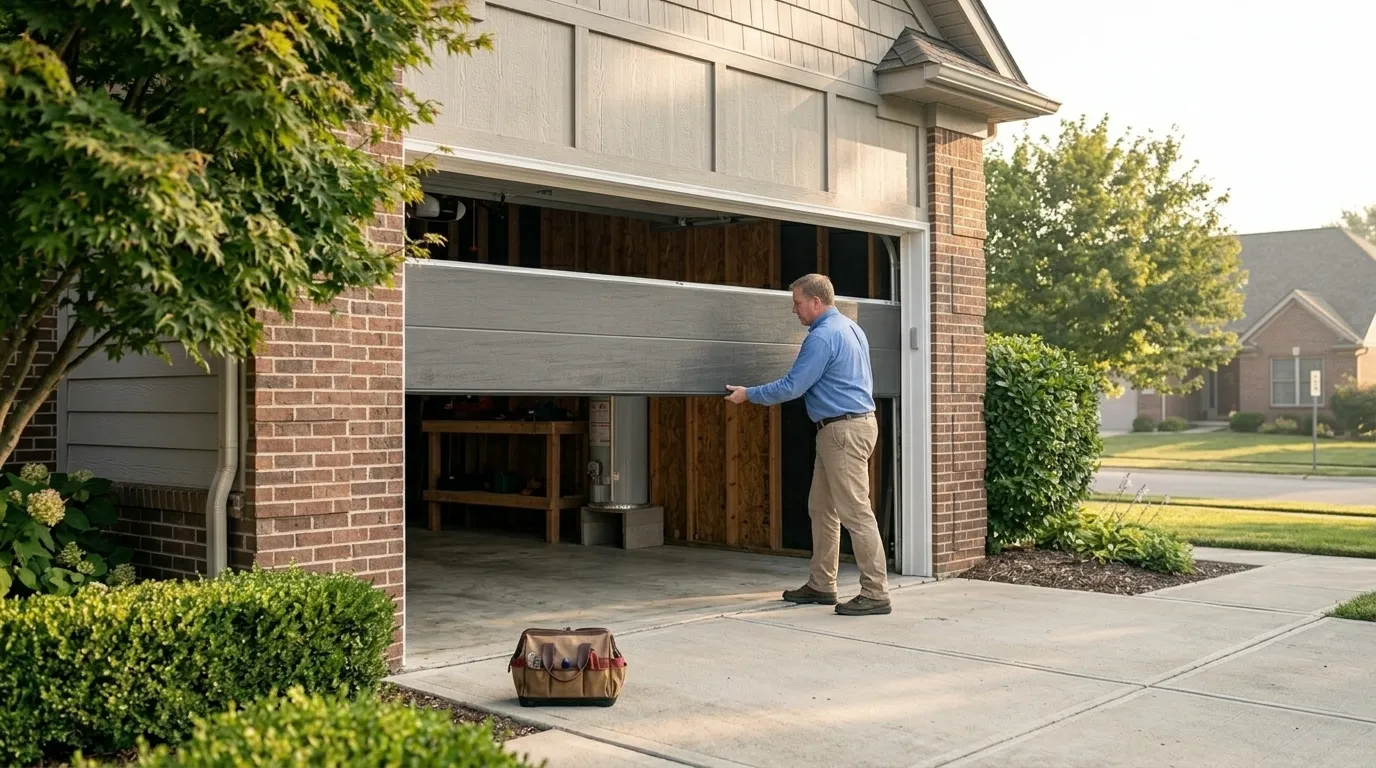
Across the 13 named areas this shop covers, the housing stock is overwhelmingly 1980s and 90s construction. That matters here for two reasons.
First, a lot of garages still run the opener that came with the house or the first replacement bought decades ago, built to specs that predate rolling-code security and modern safety-sensor requirements. Second, Cottonwood sits in a severe-heat climate band, and heat is hard on the parts that actually fail first: the circuit board, the capacitor, and the plastic drive gear.
A motor can outlast the electronics by years. What usually dies is the logic board that reads the remote signal or the sensor circuit that tells the opener the driveway is clear.
In an attached garage that bakes all afternoon, that board runs hotter than it was ever rated for, season after season. That's a slow failure, not a sudden one, which is why so many openers here go from 'a little slow' to 'completely dead' over a single summer.
This isn't a defect in any one brand. It's what happens when 1980s-era hardware meets decades of heat cycling with no upgrade in between.
Can You Do This Yourself
Some of this is within reach for a handy homeowner: clearing the track, tightening the mounting bracket, replacing a remote battery, or resetting the travel limits following the unit's manual. If the opener runs but the sensors just need re-aiming, that's a five-minute job with no tools beyond a screwdriver.
Where we'd tell you to stop is the install itself. A garage door opener install involves wiring into a household circuit, mounting a motor unit overhead that weighs enough to hurt someone if a bracket lets go, and setting the safety-reversal force to the exact spec required by federal standard - too aggressive and the door won't stop on an obstruction, too soft and it won't close reliably. Getting that force setting wrong is the one mistake that turns a convenience upgrade into a real hazard, especially in a house with kids or pets using that garage as a main entry.
We're not going to pretend every job needs a truck. If your opener is under ten years old and the fix is a logic board or a sensor, that's often a repair, not a replacement, and we'll say so on the call. Full installs are for units that are actually done.
What the Fix Involves
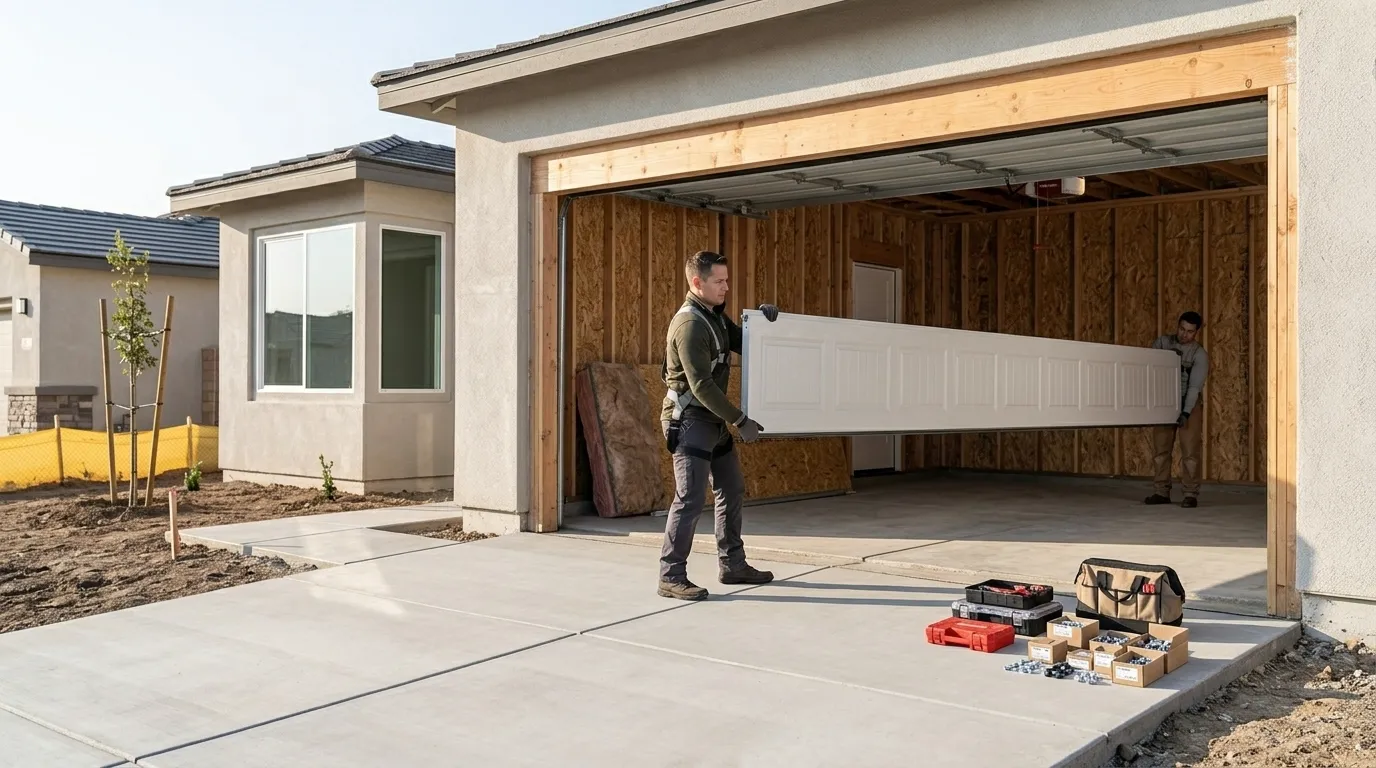
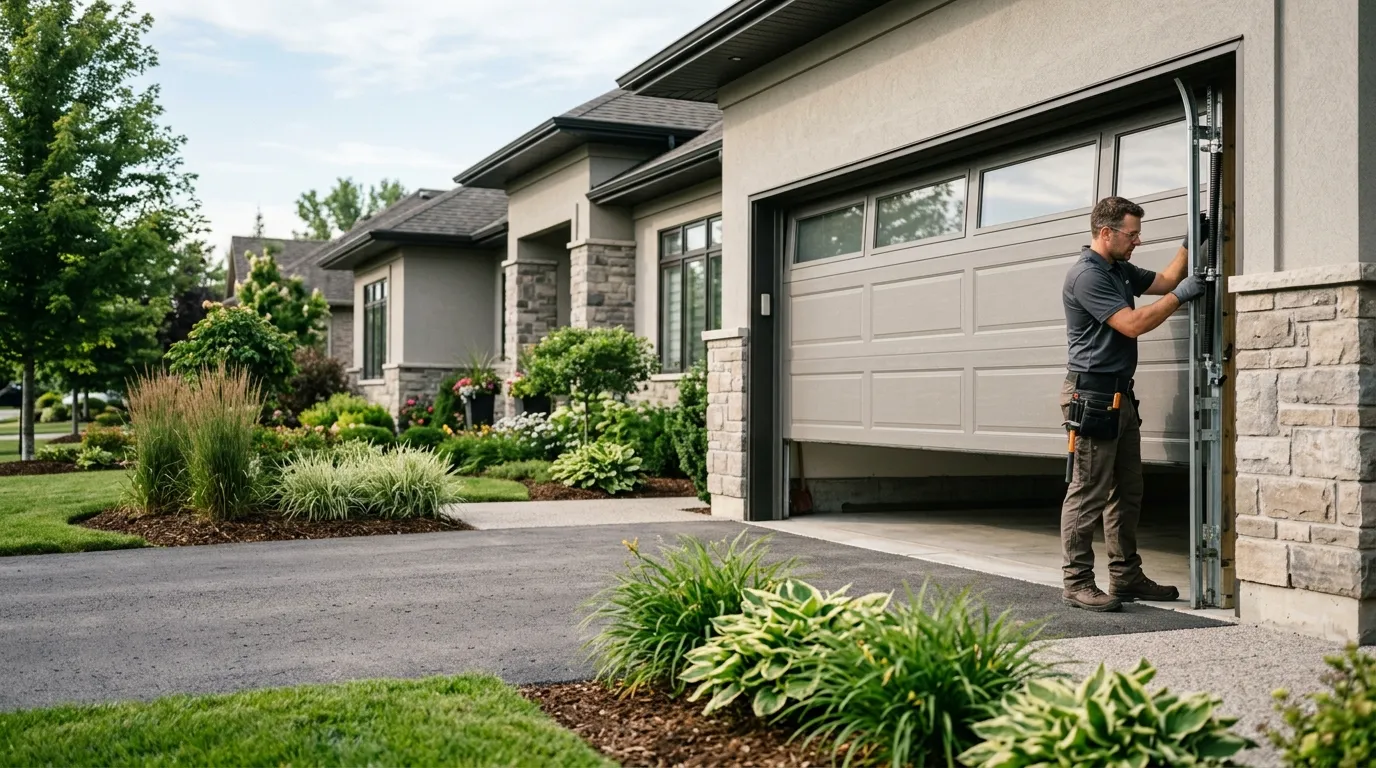
A proper install starts with pulling the old unit down, including the rail, and checking the header above the door for a solid mounting point - something we always confirm before hanging anything, since a 1980s-era garage sometimes has a header that was never built for the load of a heavier belt-drive unit.
From there it's mounting the new motor head, running the rail to the door bracket, and wiring the wall control and safety sensors on their own low-voltage line. The sensors get positioned and aimed so the beam sits at the height code requires, then the travel limits and the auto-reverse force get set and tested against an actual obstruction, not just eyeballed.
Last comes programming: remotes, any keypad, and a phone app pairing if the unit supports one. We test the door through a handful of full open-close cycles before we call it done, because a setting that looks right on the first pass sometimes drifts on the second.
One honest limit: if the header or track hardware is out of spec for a heavier modern opener, that gets fixed first. We won't hang a new motor on framing that can't carry it, even if that means the job takes longer than the opener install alone.
Talk to a Technician Before You Book
Describe what the door is doing and get a straight answer on what it likely needs.
Jobs Like Yours
Recent work from this service line.
Why Cottonwood Calls Us
Frequently Asked Questions
How old does an opener usually get before it needs full replacement in Cottonwood?
Original units in houses built in the 1980s and 90s are typically 30 to 45 years old now, and that's well past reasonable service life. Even a first-generation replacement bought in the early 2000s is old enough that parts inside it - the logic board especially - are near the end. Once the board is failing, replacement usually makes more sense than another repair.
Can I install a garage door opener myself?
Some prep work is fine on your own - clearing the track, checking the manual, testing remotes. The install itself involves overhead mounting, household wiring, and setting the federally required auto-reverse force correctly. That last step is a safety setting, not a preference, and it's where a DIY install most often goes wrong.
Why does my opener fail in summer specifically?
Cottonwood sits in a severe-heat climate band, and heat degrades the circuit board and capacitor inside an opener faster than the motor wears out mechanically. A unit that's been running fine for years can go from sluggish to dead over one hot season as those components finally give out.
Is a new opener worth it if the door itself is fine?
Yes, in most cases. The opener and the door are separate systems. If your track, springs, and panels are sound but the motor unit is original to a house built in the 1980s or 90s, replacing just the opener is a normal, contained job that doesn't touch the rest of the door.
Need What a New Garage Door Opener Needs in Cottonwood, AZ?
Call now for straight answers on cost and timing.