
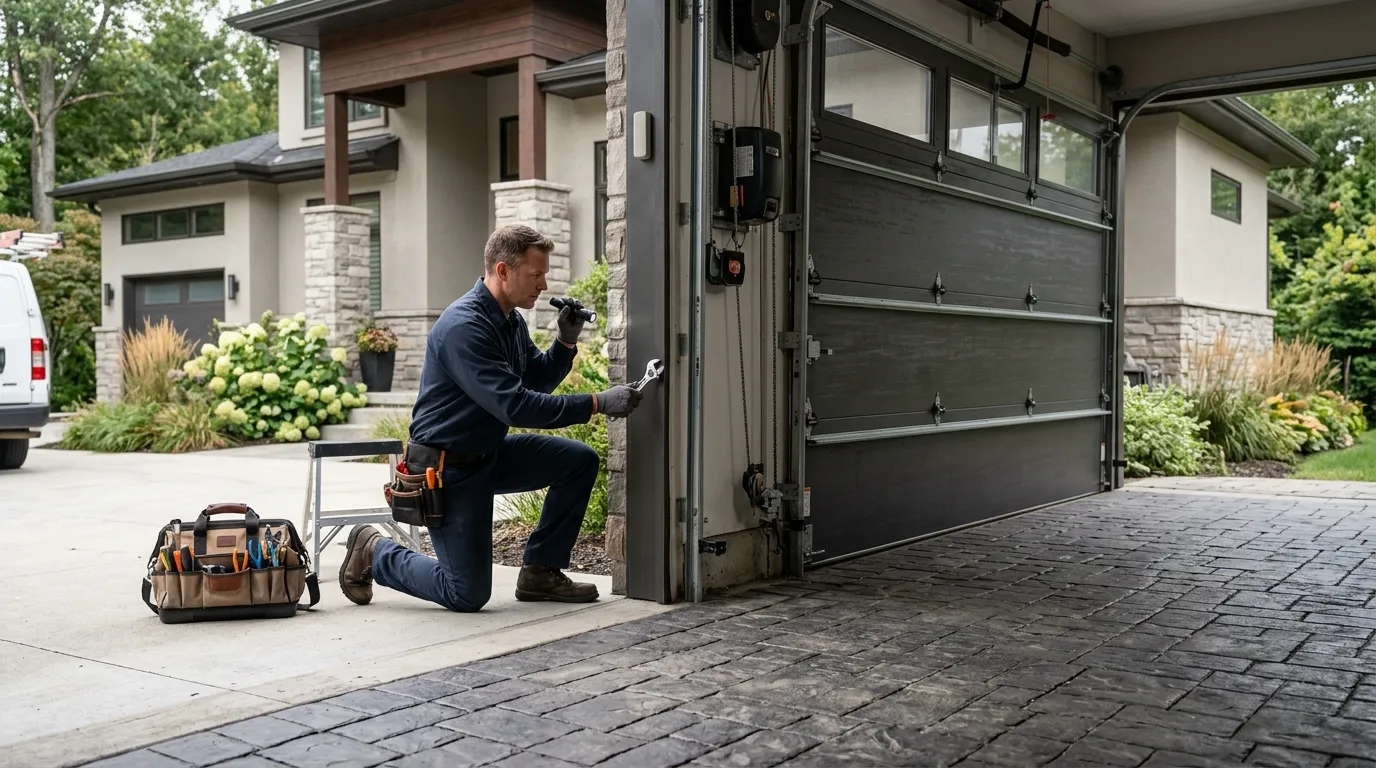
Panel Replacement in Cornville
Panel Replacement for Cornville's Late-1980s Garage Doors
Cornville homes built around 1989 carry steel sectional doors that take the brunt of severe desert heat. We drive out from Cottonwood, 6 miles away, to replace worn panels.
- Licensed & Insured
- Same-Area Service Calls
- Upfront Pricing
What Happens When You Call
-
1
Call or Request a Quote
Tell us what the door is doing and roughly how old the house is - that alone points us toward the likely part before a truck leaves.
-
2
On-Site Diagnosis
A tech checks the spring, cables, tracks, and opener in person and tells you plainly what is actually wrong.
-
3
Straight Price, No Surprises
You get a number before any work starts. It covers parts and labor, nothing added after the fact.
-
4
Fixed the Same Visit
Most repairs are done in one trip. If a part needs sourcing, we tell you that upfront instead of guessing.
Why This Fails Locally
Most garages in Cornville went up around 1989, which puts them right in the middle of the wider area's 1979-1999 building run. That means steel sectional doors, usually 16x7 for a double bay or 9x7 for a single, with embossed panel faces meant to look like wood grain from the driveway. Insulation in a door from that year is thin, if it's there at all - a lot of these are single-skin steel over a hollow frame, not the foam-filled sandwich panels you see in newer builds.
That matters here because the region sits in a severe-heat climate band. Steel expands and contracts every day, all year, and after three decades the bottom panel is usually the first to go - rust starting at the drip edge, embossing pressed flat where the sun hits hardest, or a seam that's separated from years of thermal cycling.
The panel doesn't fail because it's a bad door. It fails because it's done thirty-plus summers of exactly what it was built to do, and the metal is tired.
How Long You Are Without the Door
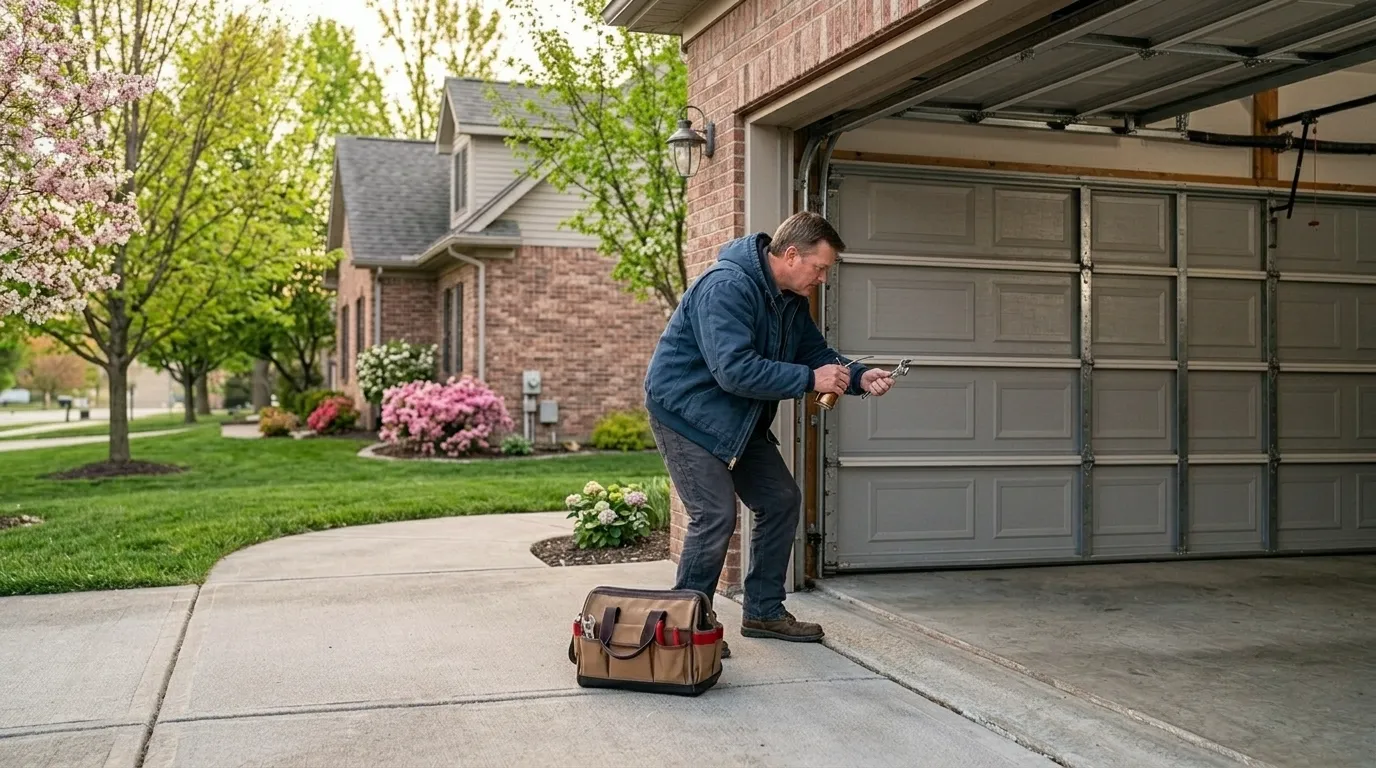
We run this job out of Cottonwood, about 6 miles from Cornville, so travel isn't the bottleneck - it's parts. A single damaged panel on a door that's still in production can sometimes be matched and swapped same visit if we're carrying stock that fits. A door from the 1989 era, though, is a different story: manufacturers change embossing patterns and panel profiles over the decades, and a door that old may not have an exact match still being made.
When that happens, we're either sourcing a close match panel-by-panel or, if the whole section run is discontinued, talking about replacing more than one panel to keep the door looking uniform. That can mean a wait on parts rather than a same-day fix. We'll tell you straight which situation you're in before we quote anything, because guessing wrong here wastes your time and ours.
What You Are Seeing
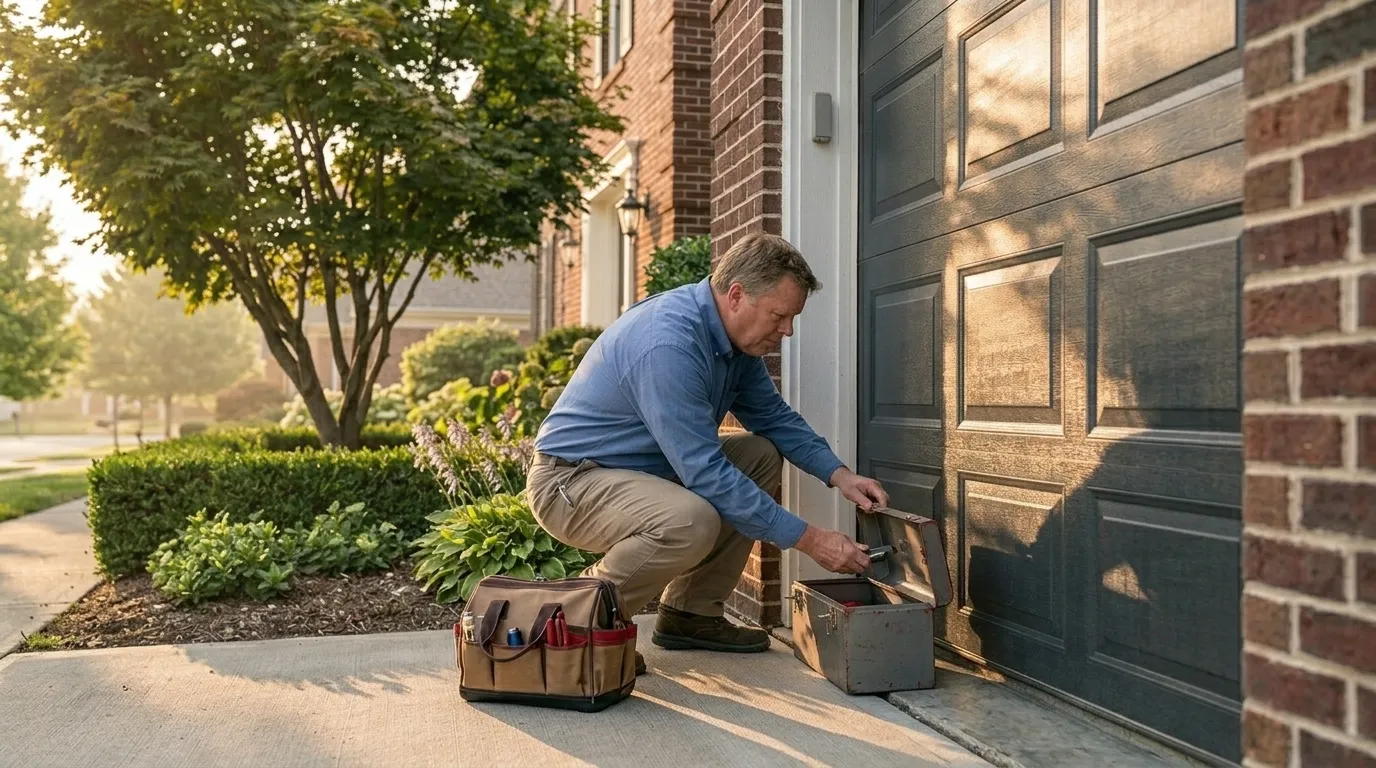
On a door this age, panel damage usually shows up in one of three ways. The first is a dent or crease from an impact - a bumper, a bike, a gust that caught the door mid-cycle - that's bent the steel enough to bind against the track.
The second is rust, almost always starting at the bottom panel where water sits after runoff, spreading up from the seam. The third is heat fatigue: the embossed pattern pressed flat, a slight bow across the panel face, or the seam between sections starting to gap.
Sometimes it's not the panel itself but what's attached to it. Hinges bolted to a thinning panel can pull loose, tearing the steel around the bolt holes rather than the hinge failing outright. If you're seeing a panel that flexes more than the ones around it, or daylight at a seam that used to be tight, that's usually panel fatigue talking, not a track or spring problem.
Parts We Carry
We stock common panel sizes and profiles that fit the sectional doors most often found on 1980s and 90s builds in this area, so a straightforward swap on a still-current door line can often be done from the truck. What we don't carry is every discontinued embossing pattern from every manufacturer that's made a door since 1979 - nobody does. If your door needs a panel that's out of production, we order it, and that's a lead time we don't control.
Honest limitation: if a door is old enough that panels aren't available at all, or the frame and track have degraded to the point that a new panel would be fighting bad hardware underneath it, panel replacement isn't the right call. At that point we'll say so rather than sell you a patch that won't hold, and talk about whether a full door replacement makes more sense for what you're spending.
The Complications
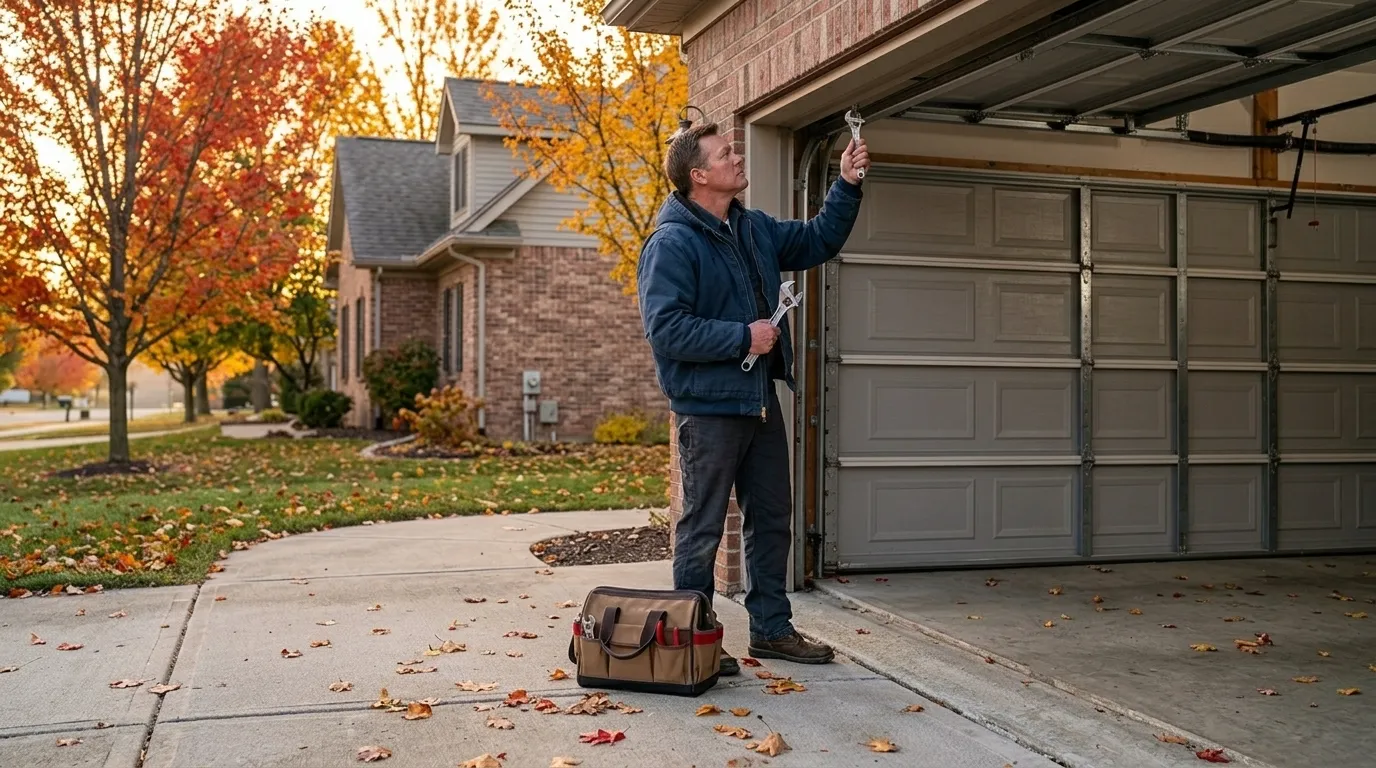
Color match is the first complication on a door this old. Steel fades and chalks under years of direct sun, and a brand-new panel dropped into a thirty-year-old door will look like exactly what it is - new - until the whole door weathers to match, which can take a season or two. Embossing pattern is the second: even a close panel match from a different production run can have a slightly different wood-grain depth, visible up close.
The third complication is structural, not cosmetic. A panel doesn't work alone - it's tied into the track, the hinges, and on the end panels, the roller stems that guide the door up the wall.
If the section next to the damaged panel has its own hairline stress or a bent hinge tab, swapping one panel and leaving the rest can just move the problem down the door. We check the whole run before we quote a single-panel job, because a repair that only fixes what you can see isn't worth doing.
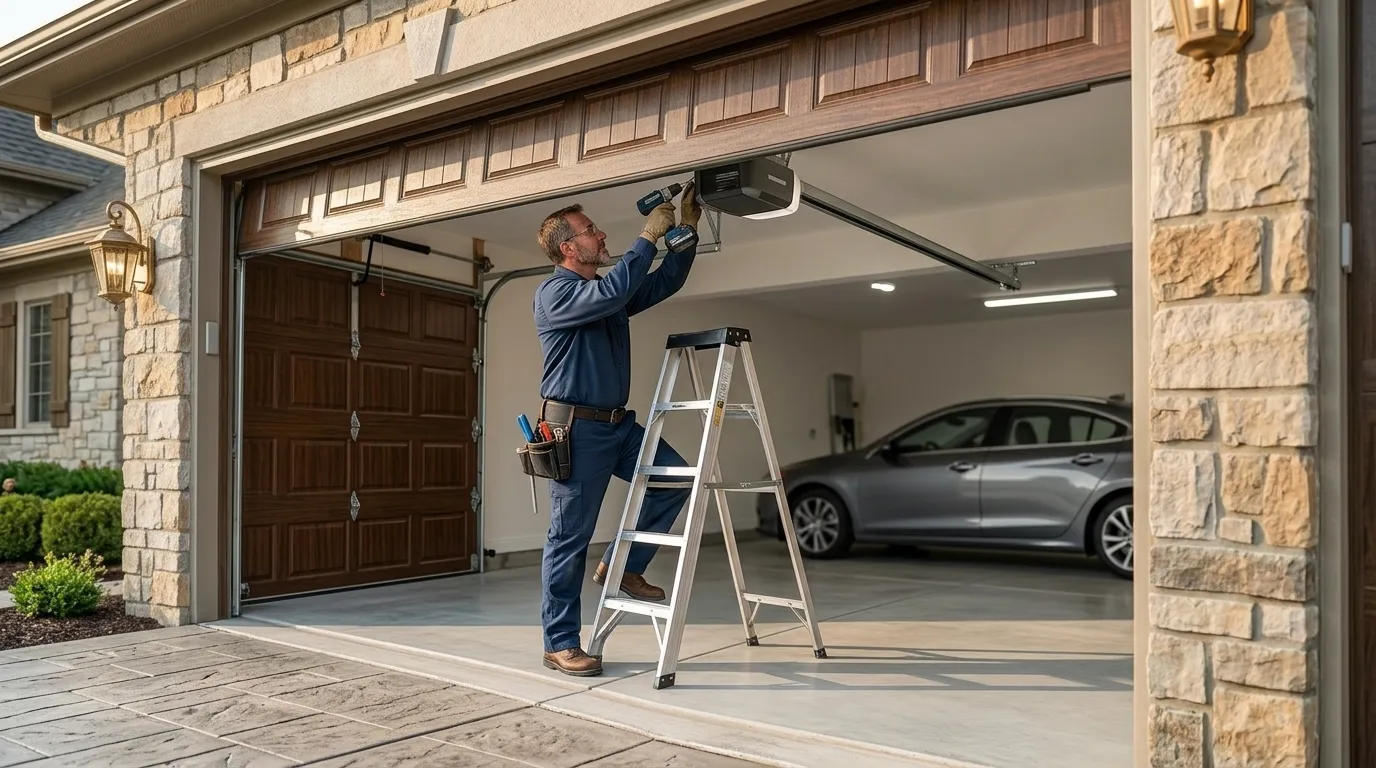
Talk to a Cornville Technician First
Describe what the door is doing and get a straight answer on what it likely needs.
Other Garage Door Services in Cornville
Recent Work in Cornville
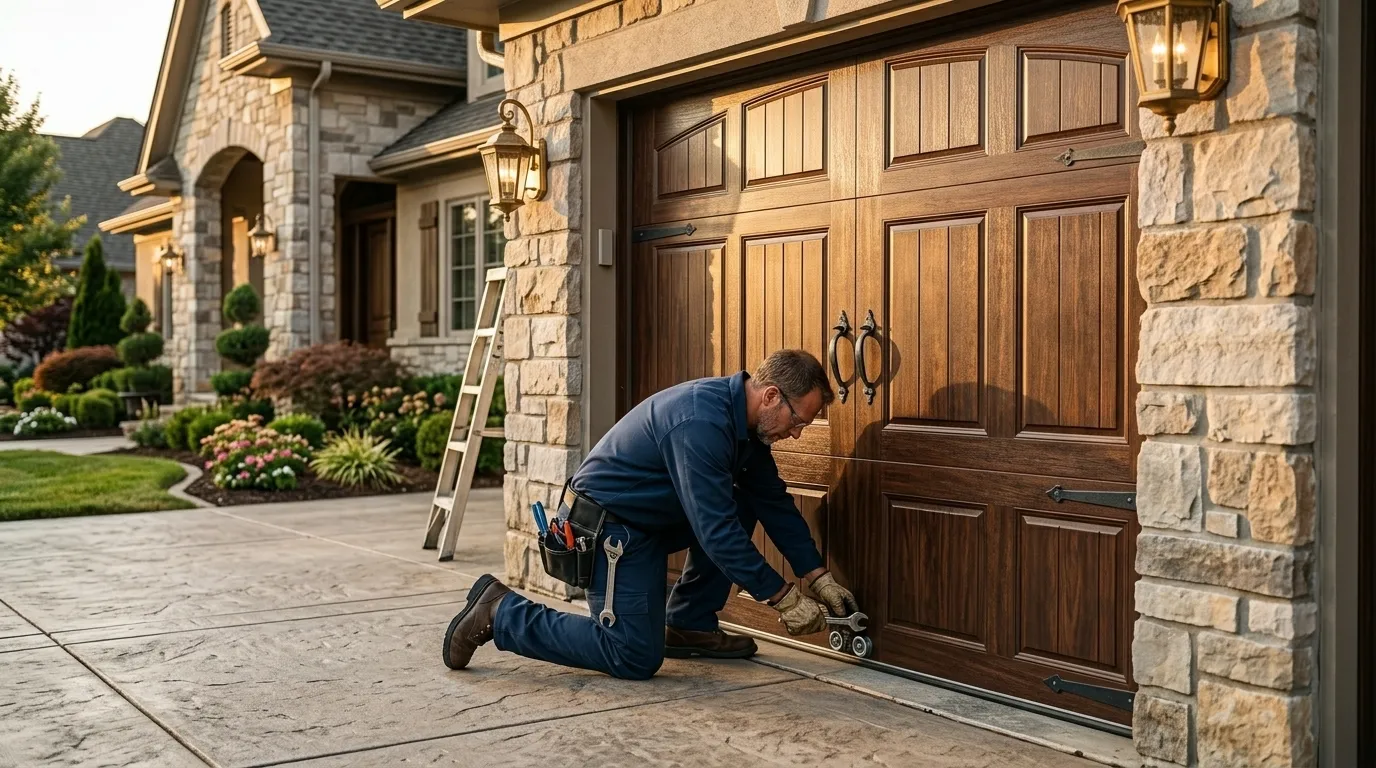
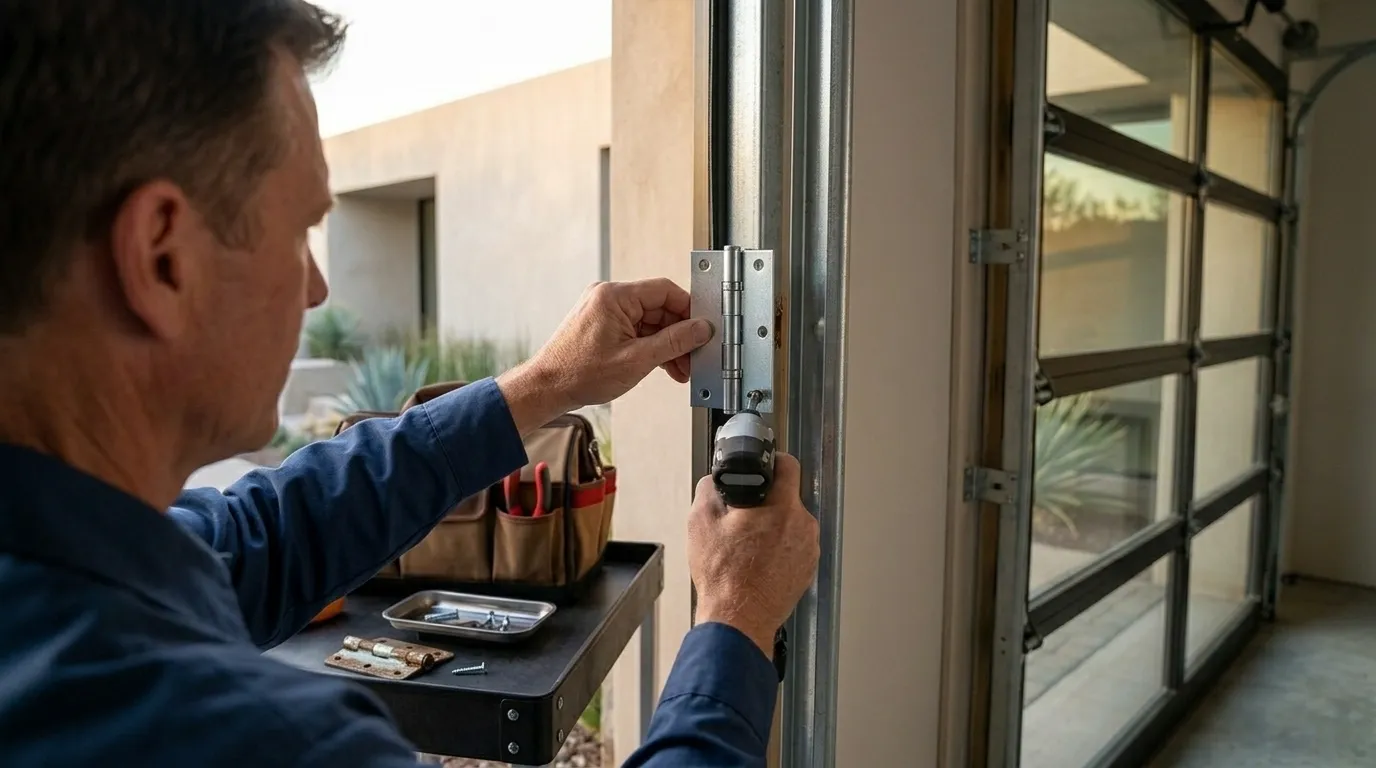
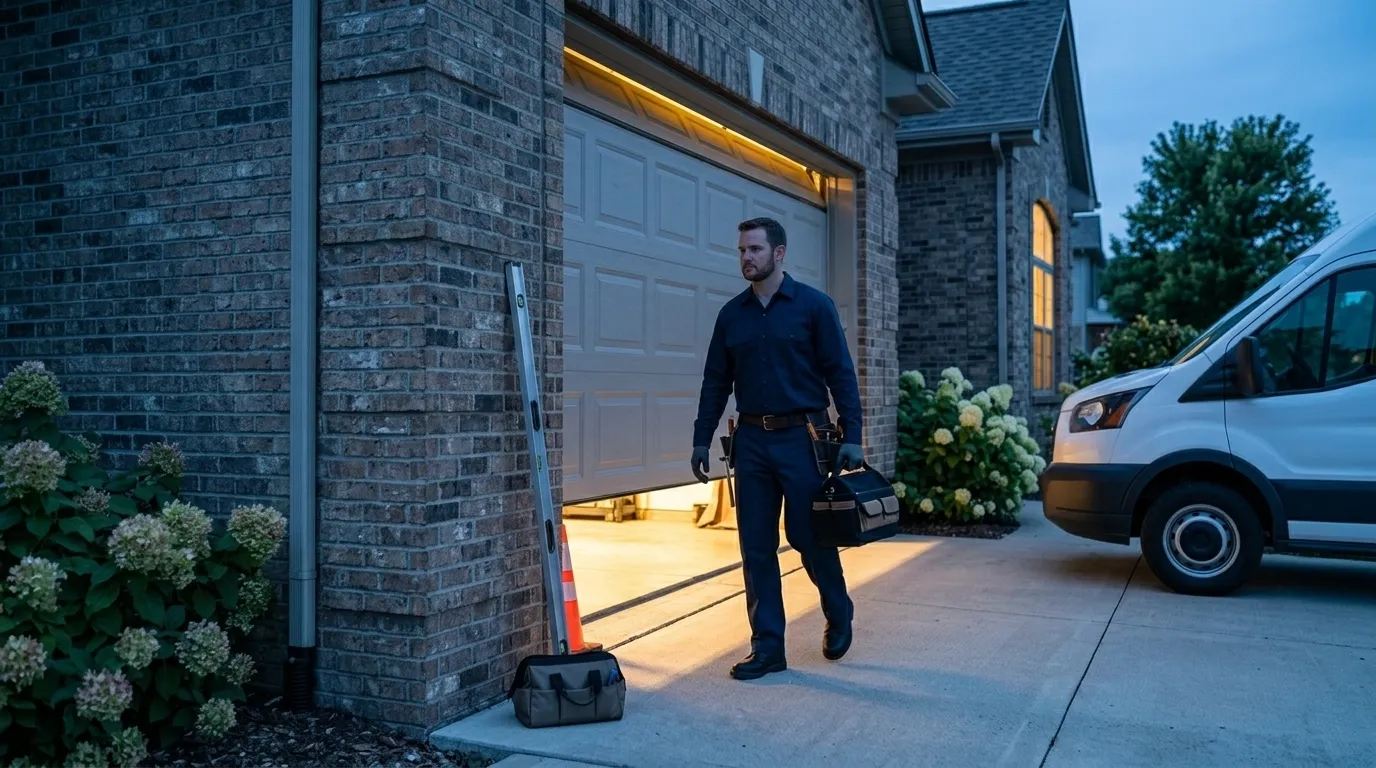
A look at jobs our crew has been on nearby.
Why Cornville Calls Us
Frequently Asked Questions
Why is my garage door panel rusting at the bottom in Cornville?
Most Cornville garages were built around 1989, and doors from that era are usually single-skin steel with thin or no insulation. The bottom panel sits closest to runoff and ground moisture, and after three decades in a severe-heat climate, that's where the seam and drip edge start to corrode first. It's the most common panel failure we see on doors this age.
Can you match a panel on an older door exactly?
Sometimes. If your door's still in production, a same-profile panel is usually available. If it's from a 1980s or 90s run that's been discontinued, we look for the closest embossing and color match we can source, but an exact match isn't guaranteed on a door that old - we'll tell you what's realistic before you commit.
How far out do you travel for a panel job in Cornville?
We run out of Cottonwood, about 6 miles from Cornville, so getting to you isn't the issue. The variable is parts - a common panel we stock gets fixed fast, but an older or discontinued profile means ordering, and that timeline depends on the manufacturer, not on the drive.
Is it ever better to replace the whole door instead of one panel?
Yes, and we'll say so if that's the case. If the frame or track has degraded along with the panel, or the panel style is old enough that stock is unreliable, patching one section can leave you with a door that still doesn't run right. We check the whole door before quoting a single-panel repair.
Need Panel Replacement in Cornville?
Call now for straight answers on cost and timing.